New Sociology Series in the Evolution Institute’s Scholarly Magazine

See below an announcement about a new series the Evolution Institute’s scholarly magazine:

Dear ASA sections chairs and chair elects,

We are pleased to announce the new sociology series in This View of Life, the Evolution Institute’s online scholarly magazine.  Adding these articles to your summer reading list won’t take your mind off our current global crises, but we guarantee the articles will stimulate some new insights about them. We would be grateful if you could distribute this among your section members. 

Check out our introductory essay with David Sloan Wilson and the first two articles: https://evolution-institute.org/debate-nothing-in-sociology-makes-sense-except-in-the-light-of-evolution/.  

New articles will be released each week according to the following schedule::

July 27:  Lengefeld, Hooks, Smith: Zoonotic Spillover and COVID

July 28:  Kalkhoff, Serpe, Pollock: Videochat and social interaction in COVID

Aug. 3:  Turner: Natural and sociocultural selection and COVID

Aug. 4:  Abrutyn: Emotions, Neuroscience, Suicide

Aug. 10:  Hitlin: Sociological social psychology and evolution

Aug. 17:  Hammond, Long-term economic growth and the pandemic

Aug. 24: Prescheduled Third Way Conversation

Aug. 31:  Evans: Institutionalization of Animal Welfare and the Evolution of Corona Virus(es)

Sept. 7:  Maryanski: COVID, evolution, and apes

Sept. 14:  Blute: Density-dependent selection

Sept. 21:  Atkinson: Religion and Evolution

Sept. 28: Prescheduled Third Way Conversation

Oct. 5:  Devine: Tyranny, evolution, and COVID

Additional articles will be published as they are completed.  We’re grateful to all who have contributed and we’ll welcome suggestions for additional essays.

Best wishes,

Russell Schutt, 2019-2020 EBS Chair and Rengin Firat, EBS Council Member

Job Posting: TT Assistant Professor Position at Marquette University

The Department of Social and Cultural Sciences invites applications for a tenure track position at the rank of Assistant Professor, beginning August 2021. We seek applicants to teach primarily in the Sociology program, with expertise in the sociology of race and ethnicity. The department is open to the full range of perspectives active in the sociology of race and ethnicity today, including those that have conventionally been understudied. The candidate who is hired will be expected to teach a course on race as well as other courses relevant to their areas of expertise. The ability to contribute to curriculum being developed around our university-wide Race, Ethnic and Indigenous Studies program will be considered an asset.

Applicants should demonstrate excellence in teaching, evidence of scholarly productivity, and a clear research agenda. A Ph.D. in Sociology or a related field is required by the time of appointment.

More information about the position here.

The job ID in the ASA job bank is: 16428

Deadline for the application: September 7th

Funded Research Opportunity: The Systematizing Confidence in Open Research and Evidence Project

See below a message from OOW member Philip Cohen:

Here is a funded research opportunity for sociologists. I’m happy to discuss this with anyone who is interested in conducting replications. Or contact the organizers directly. – Philip Cohen, pnc@umd.edu

The Systematizing Confidence in Open Research and Evidence project (SCORE) is looking for researchers to help conduct secondary data replications of claims published in leading social-behavioral sciences journals between 2009-2018. There are two different ways to participate in this project:

· Identify and prepare datasets that provide independent evidence about a claim found in this spreadsheet. Researchers will receive $2,000 for each dataset they prepare. The claims that are not already highlighted should be prioritized. The first step is to complete a data proposal following this template, which should be submitted to Andrew or Anna at COS.

· Analyze a dataset provided to you. Researchers will receive $1,000 for each dataset they analyze. The list of studies available for analysis is here. Any project not highlighted is still available, and this list will be continually updated as more datasets become available. Researchers should contact Andrew or Anna at COS when they’ve identified a project they’d like to serve as a data analyst for.

Philip N. Cohen
Department of Sociology
2112 Art-Sociology Building
University of Maryland
College Park, MD 20742
pnc@umd.edu
philipncohen.com
@familyunequal
Pronoun: he

Call for Participants: AOM Professional Development Workshop on “Trust between Individuals and Organizations”

Invitation to AOM PDW on Trust

We invite you to attend the 8th AOM Professional Development Workshop (PDW) on “Trust between Individuals and Organizations.”

Scheduled: Tuesday, Aug 11 2020, 7:00PM – 9:00PM EDT.

Format: Real-Time – Open: Presenters and audience on live video.

There is no need to register for this workshop, but you will need to register for the AOM Meeting in order to be able to attend.

Organizers: Oliver Schilke, Bart De Jong
Panelists: Katinka Bijlsma-Frankema, Chris Long, Aks Zaheer

Facilitators: Stephen Jones, Rico Lam, Michel Lander, Jessica (Wildones) Wildman, Christopher Yenkey

Workshop Summary: Trust is a fundamental characteristic of organizational relationships and one of the most frequently studied concepts in management research today. This annual PDW is aimed at advancing research on trust by serving as a platform for scholars to discuss critical issues, engage in dialogue, and help further research-in-progress. The workshop consists of two segments: (1) The first segment starts off with a panel discussion, in which leading scholars share their thought-provoking ideas on this year’s focal topic of “trust and control”; (2) For the second segment, attendees break into roundtables to discuss various relevant issues in current trust research. Each table will start out with a particular topic but may move on to other issues as the discussion unfolds. Topics may include (but are not limited to): trust asymmetries, trust violation and recovery, trust in teams, trust in interorganizational relationships, trust across levels of analysis, trust in networks, trust dynamics, and trust and contracts.

Member Publication: Mobilizing for Entitlement: A Randomised Evaluation of a Homestead Land Rights Initiative in Bihar, India

Please check out the recent publication by OOW members Andre Nickow and Sanjay Kumar. “Mobilizing for Entitlement: A Randomised Evaluation of a Homestead Land Rights Initiative in Bihar, India.” Journal of Development Studies (2020): 1-25.

Abstract

Across much of India, potentially transformative development programs are hampered by barriers to implementation. A case in point is Bihar, a province of over 100 million inhabitants, where state law guarantees each otherwise landless rural household the right to hold title over a plot of homestead land. Yet most eligible Scheduled Caste (SC) households remain untitled. This article studies a social accountability program that established, trained, and mobilised village-level community-based organisations to assist SC households in obtaining homestead title. The study employs a mixed methods design in which a survey-based field experiment estimates program impact while analysis of data from qualitative fieldwork documents ground-level processes. Results indicate that the program strongly increased land security and access to government entitlements, moderately increased asset ownership and homestead satisfaction, and had a weak positive effect on food security. However, the main impact estimates do not show statistically significant treatment effects on investment in dwellings or homestead -based livelihood activities. The qualitative analysis suggests that a key mechanism by which the program improved entitlement access was enabling target households to circumvent rent-seeking intermediaries. Results contribute to development studies research on social accountability, government service delivery, and land rights.

Member Publication: Part-time by Gender, Not Choice: The Gender Gap in Involuntary Part-time Work

Please check out the recent publication by OOW members Corey Pech, Elizabeth Klainot-Hess, and Davon Norris. “Part-time by Gender, not Choice: The Gender Gap in Involuntary Part-Time Work,” Sociological Perspectives, Online First.

Abstract

Gender inequality in the labor market is a key focus of stratification research. Increasingly, variation in hours worked separates men and women’s employment experiences. Though women often voluntarily work part-time at higher rates than men, involuntary part-time work is both analytically distinct from voluntary part-time work and leaves workers economically precarious. To date, researchers have not systematically investigated gender disparities in involuntary part-time work in the United States. Utilizing Current Population Survey data, we test for a gender gap in involuntary part-time work and evaluate two potential mechanisms: occupational segregation and penalties for care work. We find that women are much more likely than men to work in involuntary part-time positions. Occupational segregation and a care work penalty partially, but not fully, explain this gap. Findings extend existing theories of gender inequality in the workforce and show how an underresearched dimension of job quality creates gender stratification in the United States.

Call for Participants: Gender, Professions, and Organizations Writing Workshop

Register now for the 19th semi-annual Gender, Professions, and Organizations writing workshop. This summer’s workshop will be held virtually over Zoom on Friday, July 31st. To register for the workshop, email Sharla Alegria (sharla.alegria@utoronto.ca), Ethel Mickey (emickey@umass.edu) or Melissa Abad (mabad2@stanford.edu). 

The overall schedule for the day will be:

Session 1 : 10am – 1pm ET/7am-10am PT

Session 2: 1pm-4pm ET/10am-1pm PT

(Option to join one or both sessions!)

Break: 4pm-5pm ET/ 1-2pm PT

Feminist Salo(o)n: 5-6:30pm ET/2-3:30pm PT (Moderated Conversation on Feminist Futures in Gender, Professions, and Organizations will start at 5:30pm ET/2:30pm PT)

 Dear Colleagues and Friends,

 The 19th semi-annual Gender, Professions, and Organizations Writing Workshop will take place virtually, using Zoom, from 10:00am (ET)/7am (PT) to 6:30pm (ET)/3:30pm (PT) on Friday, July 31, 2020. Originally a workgroup of sociologists doing research on gender and academic careers, scientific workplace organizations, and organizational transformations to promote gender equality, the workshop now includes scholars of gender, professions, and organizations. The purpose of the workshop is to learn about the range of work that attendees are doing, to connect with others over mutual research interests, and to write “on site” together.

For many of us who have been involved in the past, the writing workshop is a valuable space for networking, community building, and intellectual exchange around collaborative work–all of the things that are hardest to replicate in a virtual environment. We’ve worked to create a format for an online workshop that, we think, will allow us to continue the spirit of the writing workshop and foster community around sociological scholarship of gender, professions, and organizations (using digital tools). We encourage new and returning participants. If you’ve never come, welcome, and if you have, welcome back! 

The day will be organized as two writing sessions: each independent session will include time to learn about each other and our work, and time for writing on your own. The workshop will conclude with a joint social event–it’s a sort of structured happy hour we’re calling a “Feminist Salo(o)n.” Because we are trying to accommodate participants in different time zones, all working from home with various other work and care commitments, we encourage participants to join for one or both writing sessions and to take breaks throughout the day as demands arise. The final part of the workshop brings us back together for the “Feminist Salo(o)n” for a brief discussion of the day and a moderated conversation with scholars we are excited to hear from about the current state and future of sociological research in the area of gender, professions, and organizations. We’ll keep the conversation active with multiple modes for inclusive participation and space for broader discussion. 

All interested sociological scholars working in the area of gender, professions, and organizations are welcome to join. Send an email to Sharla Alegria (sharla.alegria@utoronto.ca), Ethel Mickey (emickey@umass.edu), of Melissa Abad (mabad2@stanford.edu) by July 24th to register.   

Best,

Summer 2020 Gender, Professions, and Organizations Writing Workshop Co-Organizers

Ethel Mickey (Postdoctoral Research Associate, University of Massachusetts Amherst, ADVANCE)

Melissa Abad (Research Associate, Stanford University, VMWare Women’s Leadership Innovation Lab)

Elizabeta Shifrin (PhD Student, University of Illinois Urbana-Champaign)

Sharla Alegria (Assistant Professor, University of Toronto) 

Rodica Lisnic (Lecturer, University of Arkansas)

Kathrin Zippel (Professor, Northeastern University)

Laura Kramer (Professor Emerita, Montclair State University)

Former organizers: Christina Falci, Laura Hirshfield, Julia McQuillan, and Enobong Hannah (Anna) Branch, Shauna Morimoto
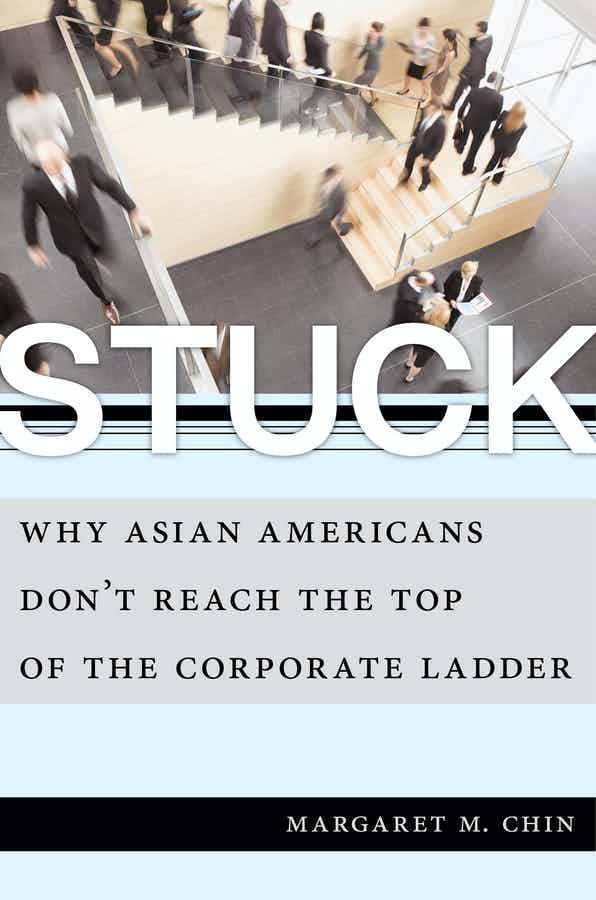
Member Publication: Stuck: Why Asian Americans Don’t Reach the Top of the Corporate Ladder

Please check out the forthcoming publication by OOW member Margaret M. Chin. 2020. Stuck: Why Asian Americans Don’t Reach the Top of the Corporate Ladder. New York: NYU Press. 

The book will be released on August 11, 2020. Here is a short description:

A behind-the-scenes examination of Asian Americans in the workplace 

In the classroom, Asian Americans, often singled out as so-called “model minorities,” are expected to be top of the class. Often they are, getting straight As and gaining admission to elite colleges and universities. But the corporate world is a different story. As Margaret M. Chin reveals in this important new book, many Asian Americans get stuck on the corporate ladder, never reaching the top. 

In Stuck, Chin shows that there is a “bamboo ceiling” in the workplace, describing a corporate world where racial and ethnic inequalities prevent upward mobility. Drawing on interviews with second-generation Asian Americans, she examines why they fail to advance as fast or as high as their colleagues, showing how they lose out on leadership positions, executive roles, and entry to the coveted boardroom suite over the course of their careers. An unfair lack of trust from their coworkers, absence of role models, sponsors and mentors, and for women, sexual harassment and prejudice especially born at the intersection of race and gender are only a few of the factors that hold Asian American professionals back. 

Ultimately, Chin sheds light on the experiences of Asian Americans in the workplace, providing insight into and a framework of who is and isn’t granted access into the upper echelons of American society, and why. 

Order online from the NYU Press website. Use promo code STUCK30 at checkout for 30% off and free shipping.

2020 OOW Award Winners

Max Weber Book Award

Winner

Tomaskovic-Devey, Donald, and Dustin Avent-Holt. 2019. Relational Inequalities: An Organizational Approach. New York: Oxford University Press. 

Honorable Mention

Sallaz, Jeffrey. 2019. Lives on the Line: How the Philippines Became the World’s Call Center Capital. New York: Oxford University Press.

James D. Thompson Graduate Student Paper Award

Winner

Guillermina Altomonte. “Exploiting Ambiguities: A Moral Polysemy Approach to Variation in Economic Practices” (published in American Sociological Review, 85(1):76-105).

Honorable Mention

Ruijie Peng: “Racial Stereotypes and Intergroup Relations in a Transnational Workplace: How Workers Respond to Workplace Inequalities.”

W. Richard Scott Article Award

Winner

Raina A. Brands and Isabel Fernandez-Mateo: “Leaning Out: How Negative Recruitment Experiences Shape Women’s Decisions to Compete for Executive Roles” (published in Administrative Science Quarterly 62(3): 405-442).

Honorable Mentions

Victor Ray: “A Theory of Racialized Organizations” (published in American Sociological Review 84(1): 26-53).

Daniel Schneider and Kristen Harknett: “Consequences of Routine Work-Schedule Instability for Worker Health and Well-Being” (published in American Sociological Review 84(1): 82-114).

Rosabeth Moss Kanter Distinguished Career Award

Arne Kalleberg, Kenan Distinguished Professor of Sociology, University of North Carolina.

The recipients of these awards will be honored at OOW’s (virtual) business meeting at ASA. Congratulations once again to all of the winners.  

New Publication: Special Issue of Work and Occupations: Consequences of Change in Healthcare for Organizations, Workers, and Patients

Please check out the new Special Issue of Work and Occupations:

Consequences of Change in Healthcare for Organizations, Workers,
and Patients

Guest Editors: Ariel C. Avgar (Cornell University), Adrienne E. Eaton
(Rutgers University), Rebecca Kolins Givan (Rutgers University), and Adam Seth Litwin (Cornell University)

A pandemic of as yet unknown duration is changing the world. We do not know exactly how, but we can be certain this global crisis will upend governments and challenge the established social order. While the edifice of healthcare provision may well be transformed, institutions, relationships and path-dependent structures will determine precisely how this transpires and what system will emerge on the other side. While the research presented in this special issue was completed before the Covid-19 pandemic arrived, the articles all shed light on how healthcare organizations can and will respond to this unprecedented challenge. The current crisis has highlighted a host of shortcomings in existing employment models, training, incentives, use of technology, supply chains, funding and investment, and so much more. What is certain, though, is that healthcare systems and organizations must change. The articles in this special issue suggest the most appropriate direction of change. Centering the needs of employees generally and, more specifically, employee voice and professional expertise, quality care, and investment in healthcare provision itself rather than bureaucracy or administration related to payment systems will prove critical.

Menchik focuses on doctors’ (i.e., cardiologists’) adoption of a new robotic technology that mediates between the doctors’ hands and the patient. He develops a two-factor typology of individual approaches to adopting the new technology focused at one axis on the degree to which a doctor is influenced by their initial training and at the other, the influence from current colleagues. Also examining the link between work and technology, Wu compares the use of paper records to tablet computers for recording data on patient encounters by home health aides. Managers in the paper system mediated between the paper records created by direct care providers and the institutions’ official records; those in the tablet system are reduced to teaching and exhorting direct care workers to properly use their tablets. VanHeuvelen and Grace examine the move from a multi occupancy ward design to single-patient rooms. They find that occupational groups differed in their embrace or resistance to the change with some groups focused on the impact on patient care and others more on changes to working conditions. Wiedner et al. examine an explicit attempt to change occupational roles in the English National Health Service by shifting elements of budgetary responsibility from career managers to physicians. They find that tensions among occupational groups, rooted in their differing “dispositions,” can derail an attempt at change. Batt, Kallas, and
Appelbaum compare the labor relations approaches of employers in the healthcare systems in the upstate New York cities of Rochester and Buffalo. They argue that the different historical paths of industrial development in each city drove disparate labor relations approaches with one emphasizing a more positive, cooperative stance by management and the other more anti-union and hostile. In turn, they argue these approaches dictated the different paths healthcare employers in each city took in more recent restructuring.

Articles
Paying the Price for a Broken Healthcare System: Rethinking Employment, Labor, and Work in a Post-Pandemic World
Avgar, A., Eaton, A.E., Givan, R.K. and Litwin, A.S.

Occupational Heterogeneity in Healthcare Workers’ Misgivings about Organizational Change
VanHeuvelen, J.S. and Grace, M.K.

Moving From Adoption to Use: Physicians’ Mixed Commitments in Deciding to Use Robotic Technologies
Menchik, D.A.

GPs are from Mars, Administrators are from Venus: The Role of Misaligned Occupational Dispositions in Inhibiting Mandated Role Change
Wiedner, R., Nigam, A. & Bento da Silva, J.

From Timesheets to Tablets: Documentation Technology in Frontline Service Sector Managers’ Coordination of Home Healthcare Services
Wu, T.

Path Dependency Versus Social Unionism in Healthcare: Bringing Employers Back In
Batt, R., Kallas, J. & Appelbaum, E.