Call for Participants: International Labour Process Conference 2021: Security in Work? The workplace after COVID-19

Registration for the virtual ILPC 2021 is now open. The conference takes place on April 12-14, and the deadline for registration is April 7. You can access the registration page here https://tinyurl.com/4a449kl6 or on our website www.ilpc.org.uk. Registration is essential to be able to have access to the conference platform so please make sure you register as soon as possible. 

The theme of the conference will be Security in Work? The workplace after COVID-19

Recognising that the workplace will not be the same place after COVID-19, the Conference plenaries will focus upon the (re)organisation of work following the pandemic and the prospect of future waves. More information about the plenary speakers.

Conference Events

Doctoral Workshop: In the morning of the 12th of April, we will be organising a highly interactive workshop, which offers a space to enhance understanding about the scope and development of labour process research and to reflect on academic career goals. The workshop will include discussions and the programme will be announced soon. 

Book Launch: We are organising a session for the launch of ‘The Political Economy of the Work in the Global South’ with the editors Anita Hammer and Adam Fishwick. 
The direct link to ‘The Political Economy of Work in the Global South’ is here: https://tinyurl.com/h5t6srft a free sample chapter is available here: https://tinyurl.com/yxry2bxf

New Journal Launch: There will also be a journal launch introducing Work in the Global Economy with new Editors in Chief Prof. Sian Moore, University of Greenwich, UK and Prof. Kirsty Newsome, University of Sheffield, UK. More information about the journal is available here: https://tinyurl.com/rrasjxyd

Call for Papers: Seminar “Rethinking the free time/work time divide”

Seminar “Rethinking the free time/work time divide”

The seminar is organized by CIMMA-IMAGER (UR 3958), a research group affiliated with Université Paris-Est Créteil, France.
The (online and/or on-site) bimonthly sessions will take place from October to December 2021.
Proposals (300-word abstract + short biography) should be submitted by May 3, 2021.
Participants will be notified in June 2021.

In a seminal article entitled “Time, Work-Discipline, and Industrial Capitalism” (1967), the historian E. P. Thompson analyzed the evolution of the concept of time in British society in the eighteenth and nineteenth centuries. He demonstrated the importance of incorporating the question of time into the study of the transformations that took place in the organization of labor during industrialization. Subsequently, scholars have questioned the ways in which temporal norms in work contexts have changed over the past two centuries. For example, historians of labor have highlighted the role of trade unions in organizing the length of work hours since the end of the nineteenth century, while sociologists of labor have been particularly interested in definitions of “work” and the issue of measuring and managing the time that our contemporary societies devote to work.

Like others, E. P. Thompson also noted that the concept of time and its evolutions are issues that do not only concern work. The time devoted to hobbies, sports, holidays, entertainment, or tourism has become inherent to the study of free time. For example, social history has documented its institutionalization, as well as the practice of leisure and vacation in British or North American societies from the nineteenth century to the present day. Following in the tracks of Robert Stebbins, who coined the concept of “serious leisure,” some sociologists have renewed the theory of leisure practices.

Building on studies of volunteer work or “gray areas” of employment on the one hand, and of workers’ leisure practices on the other, this conference proposes to combine work time and free time in the English-speaking world in order to explore their various definitions, redefinitions and the ways in which they have interacted over the centuries. This means considering the ways in which these two temporalities have changed and hybridized each other, generating tensions or new forms of balance or complementarity. How has legislation in different countries regulated free time and labor time? To what extent have new practices of work and leisure blurred the boundaries between these two temporalities? How have different perceptions of the private and professional spheres changed the way people think about and experience work and leisure time?

For this seminar, we invite researchers in the various disciplines of the humanities and economic and social sciences to consider the following topics and approaches:

  • Mapping the intersections of research on free time and work time.
  • Philosophical approaches to work and leisure.
  • Images and representations.
  • Forms of work (craftwork, servile work, volunteer work, charity work, activism, “gray areas” of employment…).
  • Social conflicts, mobilization, and labor rights.
  • Gender and the organization of work.
  • Recreational practices in the workplace.
  • Boundaries, liminality, and intersections.
  • Methodological and archival particularities.

Submission of proposals and contact: sonia.birocheau@u-pec.fr and fabienne.moine@u-pec.fr

References:

Cindy S. Aron, Working at Play: A History of Vacations in the United States, New York, Oxford University Press, 1999.

Peter Bailey, Leisure and Class in Victorian England: Rational Recreation and the Contest for Control, 1830- 1885, London, Routledge & Kegan Paul, 1978.

Peter Bailey, “Leisure, Culture, and the Historian: Reviewing the First Generation of Leisure Historiography in Britain”, Leisure Studies 8:2, 1989, 107-127.

Jean-Yves Boulin, Tiphaine de Rocquigny and Jean Viard. L’économie du temps libre (4/4). Le travail à l’assaut des loisirs. Entendez-vous l’éco? France culture, December 20, 2018. 58’.

Marie-Christine Bureau and Patrick Dieuaide, “Institutional Change and Transformations in Labour and Employment Standards: An Analysis of ‘Grey Zones’”, Transfer: European Review of Labor and Research, 24:3, August 2018, 261-277.

Hugh Cunningham, Time, Work and Leisure: Life Changes in England since 1700, Manchester, Manchester University Press, 2014.

John Krinsky and Maud Simonet, “La servitude et le volontaire: les usages politiques du travail invisible dans les parcs de la ville de New York”, Sociétés contemporaines 2012/3 (n°87), 49-74.

Catriona M. Paratt, “Little Means or Time: Working-Class Women and Leisure in Late Victorian and Edwardian England”, The International Journal of the History of Sport 15:2, August 1998, 22-53.

Robert A. Stebbins, “Serious Leisure: A Conceptual Statement”, The Pacific Sociological Review 25:2, April 1982, 251-272.

Tim Strangleman, “Representations of Labour: Visual Sociology and Work”, Sociology Compass 2:5, 2008, 1491-1505.

E. P. Thompson, “Time, Work-Discipline, and Industrial Capitalism”, Past and Present 38, December 1967, 56-97.
Message from the Chair / Virtual Event: Recording of Racism, Policing, and Incarceration: Organizational & Occupational Perspectives

Dear OOW community,

We had a wonderful, thought provoking, virtual panel yesterday on Racism, Policing, and Incarceration: Organizational & Occupational Perspectives. This is the second of out three OOW virtual events series for the current academic year. Thank you panel participants and organizers: Heather Schoenfeld, Brittany Friedman, Armando Lara-Millán, Rashawn Ray, Michael Sierra-Arévalo, and Tim Bartley.  

The video of yesterday’s panel can be found here.

Our next OOW virtual event will take place on April 21, at 1:30pm-4:00pm EST, focusing on Diverse Approaches to Race and Racism in Research on Organizations, Occupations and Work. We will host a panel discussion on racialized organizations with Stella Nkomo, University of Pretoria, South Africa; Bobby Banerjee, Cass Business School, United Kingdom and Victor Ray, University of Iowa. The discussion will be followed by a paper presentations panel. The registration link for this event can be found here.

For more virtual events, access to awards, mentoring, Work in Progress Blog and additional OOW perks please renew your ASA and OOW membership. Faculty members – this is the time to give your students a gift membership to ASA and OOW, or to OOW if they are already ASA members. Student membership fees are low and the gift of belonging to a community is one the best gifts we can give to our students.

Have a wonderful weekend,

Alexandra

Call for Expressions of Interest: Chief Editorship of Socio-Economic Review

Socio-Economic Review (SER) solicits applications for one or more new Chief Editors to join the existing editorial team. Candidates may apply individually or as part of a proposed team. The term of office is four years, renewable for up to eight years, starting in January 2022. The Chief Editor(s) receive(s) an honorarium and reimbursement for necessary travel expenses. The editorial team currently consists of one Chief Editor and five Editors appointed on a staggered schedule.

Socio-Economic Review (SER) is the official journal for and operates under the auspices of the Society for the Advancement of Socio-Economics (SASE). A core mandate of the journal is to understand the socio-political foundations of the economy and to advance socio-economics; to this end, it addresses analytic, political, and moral questions arising at the intersection between economy and society. Articles in SER explore how the economy is or should be governed by social relations, institutional rules, political decisions, and cultural values. According to the Journal Citation Report rankings (Source Clarivate, 2020), SER ranked 6th in Sociology, 11th in Political Science, and 35th in Economics, putting SER roughly within the top 4-10% of journals in these disciplines in 2019. Its 2019 Impact Factor is 3.774. SER publishes 4 issues per year, and will be fully online starting this year.

The Chief Editor(s) of SER is (are) responsible for overall editorial decision making, as well as matters related to the editorial policy of SER and the coordination of production with Oxford University Press (OUP). The new Chief Editor(s) will ideally begin working closely with the current Chief Editor to learn the role and processes of leading SER as early as July 2021 and is (are) expected to engage actively with the current Chief Editor and Managing Editor (whose current contract runs until Dec. 2022) to move into that role. The new Chief Editor(s) can bring in a number of new Editors, either at the start of the term or during the first year. The first journal issue for which the incoming Chief Editor(s) would be fully responsible is April 2022 (Volume 20/ Issue 2).

Position description:

The Chief Editor(s) has (have) primary responsibility for all editorial functions of the Journal including:

  • Working collaboratively with the other Editors and the Managing Editor to ensure the smooth operation of SER.
  • Reviewing manuscripts, including decisions of fit, selection of reviewers, and decisions of acceptance.
  • Ensuring consistency in publication standards across accepted manuscripts.
  • Communicating with authors and reviewers as needed regarding invited material (review symposiums, discussion forums, special issues), as well as regarding substantive manuscript content and review questions.
  • Adhering to industry publication standards and protocols (e.g. “Code of Conduct and Best Practice Guidelines for Journal Editors” from the Committee on Publication Ethics), publication policies of Oxford University Press, and related international guidelines.
  • Coordinating with the other Editors to assure consistency across the manuscript review process.
  • Ensuring continuous manuscript flow of high-quality papers.
  • Appointing new Editors in consultation with the Publisher, appointing Editorial Board members in consultation with the other Editors, and nominating Advisory Committee members for approval by the SASE Executive Council.
  • Communicating and working with OUP’s editorial and production staff about review procedures and guidelines, journal production management timelines and procedures, standardized OUP Journal content and guidelines (i.e., mission & scope), marketing, and other industry-related issues such as Impact Factor ratings, open access, etc.
  • Communicating with SASE in a timely manner regarding the status of the Journal including its operations and performance, concerns or initiatives from OUP, and/or other substantive issues that may affect the success of the journal.
  • Contributing to the success of the journal through attending online or in-person editorial meetings and representing the journal at events and to institutions.

The successful candidate(s) will fulfill the following criteria:

  • A strong scholarly record in accordance with the spirit and mission statement of SER, as well as that of SASE more broadly
  • A substantive connection to SASE as a scholarly community
  • Significant editorial experience and good administrative skills
  • Interdisciplinary orientation and openness to different methodologies and research designs
  • Capacity to work constructively with authors, reviewers, and the entire editorial team, as well as with SASE leadership

Support from your home institution, such as a reduced teaching load or student assistance, is desirable but not a requirement for the position.

Potential applicants are encouraged to contact Prof. Sigrid Quack at sasepresident@sase.org to discuss any questions they may have about the position or the application process.

Please email your expressions of interest to Prof. Sigrid Quack at sasepresident@sase.org. Please send a cover letter, a short statement on your proposed editorial strategy for the journal (which may include thoughts on open access, organization of workflow, and the division of labor within the editorial team), a CV that focuses on your publishing, reviewing, and editorial experience, plus information on possible support from your institution, if available.

The closing date for expressions of interest is April 30th, 2021.

For more information about the SER and SASE, go to https://academic-oup-com.ezproxy.lib.utexas.edu/ser and sase.org.

Achieving diversity and inclusion is a priority for the Society for the Advancement of Socio-Economics (SASE). SASE members study issues of inequality and exclusion, and it is important that the organization follows the principles it stands for through seeking to confront our explicit or implicit biases. A diverse and inclusive environment will also enrich the perspective of our scholarly inquiry. It is therefore the policy of SASE to recruit, include, and make visible all scholars, independent of any differences among them. 

Member Publication: How Information about Inequality Impacts Belief in Meritocracy

Please check out the recent publication by OOW member Jonathan J.B. Mijs:

Mijs, Jonathan J.B. and Christopher Hoy. 2021. “How Information about Inequality Impacts Belief in Meritocracy: Evidence from a Randomized Survey Experiment in Australia, Indonesia and Mexico.” Social Problems, Online First.

Abstract

Most people misperceive economic inequality. Learning about actual levels of inequality and social mobility, research suggests, heightens concerns but may push people’s policy preferences in any number of directions. This mixed empirical record, we argue, reflects the omission of a more fundamental question: under what conditions do people change their understanding of the meritocratic or non-meritocratic causes of inequality? To explore mechanisms of belief change we field a unique randomized survey experiment with representative populations in Australia, Indonesia, and Mexico—societies with varying levels of popular beliefs about economic inequality. Our results highlight the importance of information, perceived social position, and self-interest. In Indonesia, information describing (high) income inequality and (low) social mobility rocked our participants’ belief in meritocracy. The same information made less of a splash in Mexico, where unequal outcomes are commonly understood as the result of corruption and other non-meritocratic processes. In Australia, the impact of our informational treatment was strongest when it provided justification for people’s income position or when it corrected their perception of relative affluence. Our findings reveal asymmetric beliefs about poverty and wealth and heterogeneous responses to information. They are a call to rethink effective informational and policy interventions.

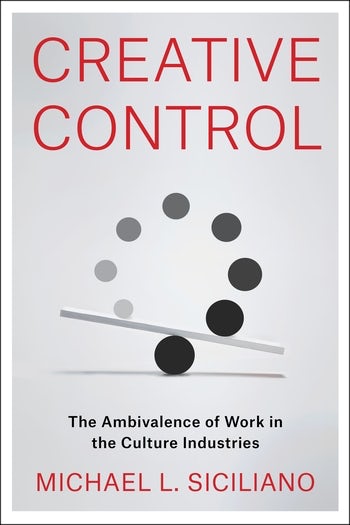
Member Publication: Creative Control: The Ambivalence of Work in the Culture Industries

Please check out the recent publication by OOW member Michael Siciliano.

Siciliano, Michael L. 2021. Creative Control: The Ambivalence of Work in the Culture Industries. Columbia University Press. 

Here is a short description of the book:

Workers in cultural industries often say that the best part of their job is the opportunity for creativity. At the same time, profit-minded managers at both traditional firms and digital platforms exhort workers to “be creative.” Even as cultural fields hold out the prospect of meaningful employment, they are marked by heightened economic precarity. What does it mean to be creative under contemporary capitalism? And how does the ideology of creativity explain workers’ commitment to precarious jobs?

Michael L. Siciliano draws on nearly two years of ethnographic research as a participant-observer in a Los Angeles music studio and a multichannel YouTube network to explore the contradictions of creative work. He details how such workplaces feature engaging, dynamic processes that enlist workers in organizational projects and secure their affective investment in ideas of creativity and innovation. Siciliano argues that performing creative labor entails a profound ambivalence: workers experience excitement and aesthetic engagement alongside precarity and alienation. Through close comparative analysis, he presents a theory of creative labor that accounts for the roles of embodiment, power, alienation, and technology in the contemporary workplace.

Combining vivid ethnographic detail and keen sociological insight, Creative Control explains why “cool” jobs help us understand how workers can participate in their own exploitation.

You can find more about the book and buy it on the Columbia University Press website.

Job Posting: Postdoc at the University of Pittsburgh School of Business

The University of Pittsburgh (Pittsburgh, PA) School of Business and Prof. CB Bhattacharya, the H.J. Zoffer Chair in Sustainability and Ethics (https://www.business.pitt.edu/people/cb-bhattacharya) is seeking a postdoctoral fellow based in Pittsburgh to serve as a key member of his research team.

DESCRIPTION

The fellowship is a two-year appointment and is funded by the Zoffer Chair via a grant from the Berg Foundation. The overarching goal of the project is to advance the understanding of sustainability and corporate responsibility in transforming business models within complex organizational environments. Start date is August 1, 2021.

In addition to joining ongoing research activities examining sustainability and corporate responsibility, ethics and leadership, the Fellow will assist with the development of new research efforts, pedagogic material, and coordinate workshops. Prof. Bhattacharya founded the Center for Sustainable Business in October 2019 and the Fellow will have ample opportunity to engage with the Center and the several companies that support it.

QUALIFICATIONS

A candidate’s doctorate can be in any relevant field with strong preference given to degrees in business management followed by the social sciences (sociology, psychology, political science, anthropology). Experience in and knowledge of sustainability, corporate social responsibility and theories of ethics and leadership in business are required. As well, knowledge of research methods and sophisticated statistical techniques is a must. Emphasis is on the ability of the Fellow to collect and analyze data and create publication-ready manuscripts for key academic outlets. Candidates must have some experience in publishing and other research-related activities. Starting date is flexible but expected start date is August 1 2021. Salary range is $50,000 to $60,000 (depending on qualifications) plus full benefits for the 12-month period.

The ideal candidate will help with all activities pertaining to publishing books and articles – e.g., literature reviews, popular press and sustainability report searches, data collection, data analysis, etc. I will also need help in preparing presentations, teaching material, grading, academic reviews and other activities germane to academic life. Overall, this is an ideal learning opportunity where the candidate will not only gain training and exposure to an exciting and increasingly important research field but also learn more about the joys and challenges of academic life.

APPLICATION PROCEDURE

Review of applications will begin immediately and continue until position filled or search closed. To be considered for this position, please submit a current curriculum vitae, statement of research interests, a writing sample and contact information for three references to Jill Morris-Tillman (JEM344@pitt.edu), with Subject “Bhattacharya Post-doc”. The University of Pittsburgh is an Affirmative Action, Equal Opportunity Employer and values equality of opportunity, human dignity and diversity.

Call for Participants: The Medici Summer School in Management Studies

The Medici Summer School in Management Studies
Bologna, June 14-June 18, 2021

We are pleased to announce the organization of the 13th edition of the Medici Summer School in Management Studies for doctoral students and young researchers which will be held in Bologna, June 14-June 18, 2021. The school is organized and sponsored by Bologna Business School (University of Bologna), HEC Paris (Society and Organizations Research Center and the HEC Foundation), and MIT Sloan School.

The Summer School is designed to promote doctoral education and research organization theory and related fields (economic sociology, management studies, strategy) and contribute to the development of enlightened practice in the management of business organizations. The Summer School is a unique educational program for qualified doctoral students interacting with thought leaders in the management field who will share their knowledge and wisdom on frontier research topics.

The title of the 2021 edition is:

Cooperation in organizing and innovating

The Summer School combines lectures and research seminars by international scholars with an active engagement of participant students. Confirmed faculty members:

  • Delia Baldassarri (NYU)
  • Emilio Castilla (MIT)
  • Gino Cattani (NYU)
  • Rodolphe Durand (HEC Paris)
  • Alessandro Lomi (University of Italian Switzerland in Lugano)
  • Simone Ferriani (University of Bologna & City, University of London)
  • Claudine Gartenberg (The Wharton School)
  • Ray Reagans (MIT Sloan)
  • Arnout van de Rijt (European University Institute)
  • Ezra Zuckerman (MIT)

The school will be convened online by Bologna Business School. However, if it looks possible to convene at least some portion of the faculty and students in person, a blended approach could be contemplated (any in-person component would be in Bologna).

Application procedure           

Applications are welcome from current Ph.D. students in Management, Strategy, Organization Theory, Economic Sociology, and related disciplines from universities worldwide. Students for the Summer School will be selected in accordance with the quality of their doctoral curricula, research interests, and application materials.  Applications from students who have completed at least two years of doctoral training will be considered, with preference given to those who have satisfied their course requirements and exams but have not yet embarked on their dissertation research.  Applications from post-docs will also be considered.
 
There is no application or participation fee.

The deadline for applications is March 30th, 2021. Admitted candidates will be notified by April 25. A waiting list of other candidates will be established.

Full program and application details can be found at:

https://www.bbs.unibo.eu/xiii-medici-summer-school/

or

https://www.hec.edu/en/news-room/13th-edition-medici-summer-school-cooperation-organizing-and-innovating

OOW Virtual Event: Racism, Policing, and Incarceration: Organizational and Occupational Perspectives

An OOW Panel Discussion
Racism, Policing, and Incarceration: Organizational & Occupational Perspectives

Wednesday, March 3, 1:30-2:45 Eastern
Registration link

Leading scholars consider how racism in policing, incarceration, and criminal justice are linked to organizations, occupations, and work.

Panelists:

Brittany Friedman, Rutgers, The State University of New Jersey
Armando Lara-Millán, University of California-Berkeley
Rashawn Ray, University of Maryland
Michael Sierra-Arévalo, University of Texas at Austin

Moderator:

Heather Schoenfeld, Boston University

Organizers:

Tim Bartley, Washington University in St. Louis
Heather Schoenfeld, Boston University
Rashawn Ray, University of Maryland

Virtual Event: Recording of the OOW Careers Beyond Academia

Dear OOW Members,

The OOW Careers Beyond Academia event was very rich with advice and information about jobs in think tanks, policy, research, government and industry. Thirteen great panelists shared with us their career paths, contemplations, decisions, and experiences, and answered many questions from the large audience that attended (between 110-230 people in different times of the event). Advice covered topics such as, the use of social ties, how to read job ads, hard and soft skills, quantitative and qualitative methods, work family balance, pay and much more.

This is the link for the recording of the entire event. The conversation can continue in the comments section below this post. Some of the panelists generously volunteered to answer questions after the event.

Many many thanks to the OOW event organizing committee members: OOW Chair Elect Elizabeth Popp Berman, and OOW council members: LaTonya Trotter and Tim Bartely (Head of Event Committee). Thank you to Rachel Underwood, a PhD student at Vanderbilt University, for managing the q&a discussion so seamlessly!

And huge thank you to the panelists who put so much attention to their talks and their answers: Leslie Hinkson, Steve Nuñez, Shelly Steward, Lindsay Owens, George Hobor, Caren Arbeit, Chris Bourg, Susan Biancani, Tina Park, Rachael Ferguson and Phaedra Daipha.

See you all in our next events:

Racism, Policing, and Incarceration: Organizational and Occupational Perspectives. A panel discussion – Wednesday, March 3, 1:30-2:45 pm Eastern

Diverse Approaches to Race in OOW. Keynotes and a panel discussion – Wednesday, April 21, 1:30-2:45 pm Eastern

Upward and Onward,

Alexandra Kalev