Member Publication: How Information about Inequality Impacts Belief in Meritocracy

Please check out the recent publication by OOW member Jonathan J.B. Mijs:

Mijs, Jonathan J.B. and Christopher Hoy. 2021. “How Information about Inequality Impacts Belief in Meritocracy: Evidence from a Randomized Survey Experiment in Australia, Indonesia and Mexico.” Social Problems, Online First.

Abstract

Most people misperceive economic inequality. Learning about actual levels of inequality and social mobility, research suggests, heightens concerns but may push people’s policy preferences in any number of directions. This mixed empirical record, we argue, reflects the omission of a more fundamental question: under what conditions do people change their understanding of the meritocratic or non-meritocratic causes of inequality? To explore mechanisms of belief change we field a unique randomized survey experiment with representative populations in Australia, Indonesia, and Mexico—societies with varying levels of popular beliefs about economic inequality. Our results highlight the importance of information, perceived social position, and self-interest. In Indonesia, information describing (high) income inequality and (low) social mobility rocked our participants’ belief in meritocracy. The same information made less of a splash in Mexico, where unequal outcomes are commonly understood as the result of corruption and other non-meritocratic processes. In Australia, the impact of our informational treatment was strongest when it provided justification for people’s income position or when it corrected their perception of relative affluence. Our findings reveal asymmetric beliefs about poverty and wealth and heterogeneous responses to information. They are a call to rethink effective informational and policy interventions.

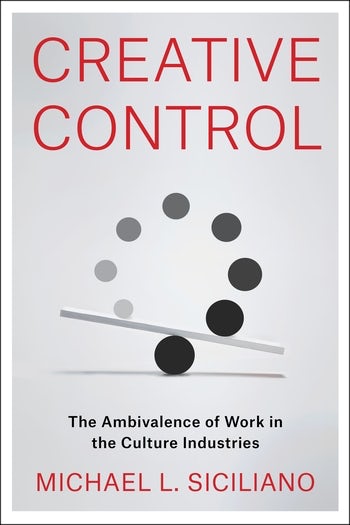
Member Publication: Creative Control: The Ambivalence of Work in the Culture Industries

Please check out the recent publication by OOW member Michael Siciliano.

Siciliano, Michael L. 2021. Creative Control: The Ambivalence of Work in the Culture Industries. Columbia University Press. 

Here is a short description of the book:

Workers in cultural industries often say that the best part of their job is the opportunity for creativity. At the same time, profit-minded managers at both traditional firms and digital platforms exhort workers to “be creative.” Even as cultural fields hold out the prospect of meaningful employment, they are marked by heightened economic precarity. What does it mean to be creative under contemporary capitalism? And how does the ideology of creativity explain workers’ commitment to precarious jobs?

Michael L. Siciliano draws on nearly two years of ethnographic research as a participant-observer in a Los Angeles music studio and a multichannel YouTube network to explore the contradictions of creative work. He details how such workplaces feature engaging, dynamic processes that enlist workers in organizational projects and secure their affective investment in ideas of creativity and innovation. Siciliano argues that performing creative labor entails a profound ambivalence: workers experience excitement and aesthetic engagement alongside precarity and alienation. Through close comparative analysis, he presents a theory of creative labor that accounts for the roles of embodiment, power, alienation, and technology in the contemporary workplace.

Combining vivid ethnographic detail and keen sociological insight, Creative Control explains why “cool” jobs help us understand how workers can participate in their own exploitation.

You can find more about the book and buy it on the Columbia University Press website.

Job Posting: Postdoc at the University of Pittsburgh School of Business

The University of Pittsburgh (Pittsburgh, PA) School of Business and Prof. CB Bhattacharya, the H.J. Zoffer Chair in Sustainability and Ethics (https://www.business.pitt.edu/people/cb-bhattacharya) is seeking a postdoctoral fellow based in Pittsburgh to serve as a key member of his research team.

DESCRIPTION

The fellowship is a two-year appointment and is funded by the Zoffer Chair via a grant from the Berg Foundation. The overarching goal of the project is to advance the understanding of sustainability and corporate responsibility in transforming business models within complex organizational environments. Start date is August 1, 2021.

In addition to joining ongoing research activities examining sustainability and corporate responsibility, ethics and leadership, the Fellow will assist with the development of new research efforts, pedagogic material, and coordinate workshops. Prof. Bhattacharya founded the Center for Sustainable Business in October 2019 and the Fellow will have ample opportunity to engage with the Center and the several companies that support it.

QUALIFICATIONS

A candidate’s doctorate can be in any relevant field with strong preference given to degrees in business management followed by the social sciences (sociology, psychology, political science, anthropology). Experience in and knowledge of sustainability, corporate social responsibility and theories of ethics and leadership in business are required. As well, knowledge of research methods and sophisticated statistical techniques is a must. Emphasis is on the ability of the Fellow to collect and analyze data and create publication-ready manuscripts for key academic outlets. Candidates must have some experience in publishing and other research-related activities. Starting date is flexible but expected start date is August 1 2021. Salary range is $50,000 to $60,000 (depending on qualifications) plus full benefits for the 12-month period.

The ideal candidate will help with all activities pertaining to publishing books and articles – e.g., literature reviews, popular press and sustainability report searches, data collection, data analysis, etc. I will also need help in preparing presentations, teaching material, grading, academic reviews and other activities germane to academic life. Overall, this is an ideal learning opportunity where the candidate will not only gain training and exposure to an exciting and increasingly important research field but also learn more about the joys and challenges of academic life.

APPLICATION PROCEDURE

Review of applications will begin immediately and continue until position filled or search closed. To be considered for this position, please submit a current curriculum vitae, statement of research interests, a writing sample and contact information for three references to Jill Morris-Tillman (JEM344@pitt.edu), with Subject “Bhattacharya Post-doc”. The University of Pittsburgh is an Affirmative Action, Equal Opportunity Employer and values equality of opportunity, human dignity and diversity.

Call for Participants: The Medici Summer School in Management Studies

The Medici Summer School in Management Studies
Bologna, June 14-June 18, 2021

We are pleased to announce the organization of the 13th edition of the Medici Summer School in Management Studies for doctoral students and young researchers which will be held in Bologna, June 14-June 18, 2021. The school is organized and sponsored by Bologna Business School (University of Bologna), HEC Paris (Society and Organizations Research Center and the HEC Foundation), and MIT Sloan School.

The Summer School is designed to promote doctoral education and research organization theory and related fields (economic sociology, management studies, strategy) and contribute to the development of enlightened practice in the management of business organizations. The Summer School is a unique educational program for qualified doctoral students interacting with thought leaders in the management field who will share their knowledge and wisdom on frontier research topics.

The title of the 2021 edition is:

Cooperation in organizing and innovating

The Summer School combines lectures and research seminars by international scholars with an active engagement of participant students. Confirmed faculty members:

  • Delia Baldassarri (NYU)
  • Emilio Castilla (MIT)
  • Gino Cattani (NYU)
  • Rodolphe Durand (HEC Paris)
  • Alessandro Lomi (University of Italian Switzerland in Lugano)
  • Simone Ferriani (University of Bologna & City, University of London)
  • Claudine Gartenberg (The Wharton School)
  • Ray Reagans (MIT Sloan)
  • Arnout van de Rijt (European University Institute)
  • Ezra Zuckerman (MIT)

The school will be convened online by Bologna Business School. However, if it looks possible to convene at least some portion of the faculty and students in person, a blended approach could be contemplated (any in-person component would be in Bologna).

Application procedure           

Applications are welcome from current Ph.D. students in Management, Strategy, Organization Theory, Economic Sociology, and related disciplines from universities worldwide. Students for the Summer School will be selected in accordance with the quality of their doctoral curricula, research interests, and application materials.  Applications from students who have completed at least two years of doctoral training will be considered, with preference given to those who have satisfied their course requirements and exams but have not yet embarked on their dissertation research.  Applications from post-docs will also be considered.
 
There is no application or participation fee.

The deadline for applications is March 30th, 2021. Admitted candidates will be notified by April 25. A waiting list of other candidates will be established.

Full program and application details can be found at:

https://www.bbs.unibo.eu/xiii-medici-summer-school/

or

https://www.hec.edu/en/news-room/13th-edition-medici-summer-school-cooperation-organizing-and-innovating

OOW Virtual Event: Racism, Policing, and Incarceration: Organizational and Occupational Perspectives

An OOW Panel Discussion
Racism, Policing, and Incarceration: Organizational & Occupational Perspectives

Wednesday, March 3, 1:30-2:45 Eastern
Registration link

Leading scholars consider how racism in policing, incarceration, and criminal justice are linked to organizations, occupations, and work.

Panelists:

Brittany Friedman, Rutgers, The State University of New Jersey
Armando Lara-Millán, University of California-Berkeley
Rashawn Ray, University of Maryland
Michael Sierra-Arévalo, University of Texas at Austin

Moderator:

Heather Schoenfeld, Boston University

Organizers:

Tim Bartley, Washington University in St. Louis
Heather Schoenfeld, Boston University
Rashawn Ray, University of Maryland

Virtual Event: Recording of the OOW Careers Beyond Academia

Dear OOW Members,

The OOW Careers Beyond Academia event was very rich with advice and information about jobs in think tanks, policy, research, government and industry. Thirteen great panelists shared with us their career paths, contemplations, decisions, and experiences, and answered many questions from the large audience that attended (between 110-230 people in different times of the event). Advice covered topics such as, the use of social ties, how to read job ads, hard and soft skills, quantitative and qualitative methods, work family balance, pay and much more.

This is the link for the recording of the entire event. The conversation can continue in the comments section below this post. Some of the panelists generously volunteered to answer questions after the event.

Many many thanks to the OOW event organizing committee members: OOW Chair Elect Elizabeth Popp Berman, and OOW council members: LaTonya Trotter and Tim Bartely (Head of Event Committee). Thank you to Rachel Underwood, a PhD student at Vanderbilt University, for managing the q&a discussion so seamlessly!

And huge thank you to the panelists who put so much attention to their talks and their answers: Leslie Hinkson, Steve Nuñez, Shelly Steward, Lindsay Owens, George Hobor, Caren Arbeit, Chris Bourg, Susan Biancani, Tina Park, Rachael Ferguson and Phaedra Daipha.

See you all in our next events:

Racism, Policing, and Incarceration: Organizational and Occupational Perspectives. A panel discussion – Wednesday, March 3, 1:30-2:45 pm Eastern

Diverse Approaches to Race in OOW. Keynotes and a panel discussion – Wednesday, April 21, 1:30-2:45 pm Eastern

Upward and Onward,

Alexandra Kalev

Member Publication: Unmasking work-family balance barriers and strategies among working fathers in the workplace

Please check out the recent publication by OOW members Sabrina Tanquerel and Marc Grau-Grau.

Tanquerel, Sabrina, and Marc Grau-Grau. 2020. “Unmasking Work-Family Balance Barriers and Strategies among Working Fathers in the Workplace.” Organization 27 (5): 680–700.

Abstract:

This article explores the barriers and strategies experienced by Spanish working fathers regarding work-family balance. Based on 29 in-depth interviews with Spanish working fathers in different types of organizations and sectors, the results of this study present different barriers that are divided into three groups: contextual barriers, organizational barriers and internalized barriers. The results also suggest that the study’s participants fall into three categories or patterns: hegemonic gender order conformers, borderers and deviants, who use three different strategies (no strategies, invisible strategies and visible strategies) to overcome the barriers detected in this research. The dynamics of reinforcing, being complicit and challenging hegemonic masculinities within the workplace are discussed in light of recent theories regarding gender and organizations, masculinities and fatherhood.

Call for Papers: Issue of RSF: The Russell Sage Foundation Journal of the Social Sciences

Issue of RSF: The Russell Sage Foundation Journal of the Social Sciences on:

Administrative Burdens as a Mechanism of Inequality in Policy Implementation

Edited by
Pamela Herd, Georgetown University
Hilary Hoynes, University of California Berkeley
Jamila Michener, Cornell University
Donald Moynihan, Georgetown University

This special issue invites empirical papers that seek to enlarge our understanding of how administrative burdens contribute to inequality in policy implementation processes and outcomes, and potential solutions to these problems. Administrative burdens are people’s experiences of policy implementation as onerous. Burdens include learning costs, i.e., the time and effort it takes to find information about public services and what is required to access them; compliance costs, which include the paperwork needed to demonstrate eligibility, and the time and financial costs required by administrative processes. Administrative burdens also take the form of psychological costs. Psychological costs include the experience of stigma from applying for and participating in an unpopular program. They might also arise via a sense of a loss of autonomy when people feel they are subject to intrusive or coercive state power, the stresses from not knowing whether one can negotiate administrative ordeals where critical resources hang in the balance, or the accumulation of frustrations that come with burdens, especially those seen as unjust or unnecessary.

Social scientists have grappled with this issue from specific disciplinary perspectives. Economics has focused on ‘take-up’ or how these barriers impede access, for eligible populations, to social welfare policies. Political science has explored how politics can shape the creation of burdens and how the experience of burdens can influence beliefs such as political efficacy and trust in government. Sociology has emphasized how these burdens, within the context of organizations, are both a function of and a contributor to gender, race, and class inequality. Public administration has clarified the organizational basis of administrative burdens, including the use of bureaucratic discretion. The goal of this issue is to bring insights from multiple disciplines to grapple with the broader implications of these burdens for inequality.

Please click here for a full description of the topics covered in this call for articles.

Anticipated Timeline

Prospective contributors should submit a CV and an abstract (up to two pages in length, single or double spaced) of their study along with up to two pages of supporting material (e.g., tables, figures, pictures, references that don’t fit on the proposal pages, etc.) no later than 5 PM EST on April 21, 2021 to:

https://rsf.fluxx.io

NOTE that if you wish to submit an abstract and do not yet have an account with us, it can take up to 48 hours to get credentials, so please start your application at least two days before the deadline. All submissions must be original work that has not been previously published in part or in full. Only abstracts submitted to https://rsf.fluxx.io

will be considered. Each paper will receive a $1,000 honorarium when the issue is published. All questions regarding this issue should be directed to Suzanne Nichols, Director of Publications, at journal@rsage.org and not to the email addresses of the editors of the issue.

A conference will take place at the Russell Sage Foundation in New York City on February 25, 2022. The selected contributors will gather for a one-day workshop to present draft papers (due a month prior to the conference on 1/25/22) and receive feedback from the other contributors and editors. Travel costs, food, and lodging for one author per paper will be covered by the foundation. Papers will be circulated before the conference. After the conference, the authors will submit their revised drafts by 6/1/22. The papers will then be sent out to three additional scholars for formal peer review. Having received feedback from reviewers and the RSF board, authors will revise their papers by 11/1/22. The full and final issue will be published in the fall of 2023. Papers will be published open access on the RSF website as well as in several digital repositories, including JSTOR and UPCC/Muse.

Please click here for a full description of the topics covered in this call for articles.

Job Posting: Postdoc at the VMware Women’s Leadership Innovation Lab at Stanford University

Stanford Impact Labs is a new initiative at Stanford University investing in highly-motivated teams of researchers and practitioners—impact labs—to generate new insights and solutions to persistent social problems. To begin in the Fall of 2021, Stanford Impact Labs is now accepting applications to the two-year postdoctoral fellowship program in collaboration with three impact labs.

As part of this inaugural program, the VMware Women’s Leadership Innovation Lab is seeking a diverse pool of applicants who wish to join a team-based, collaborative community that value the different skills, expertise, and perspectives necessary to design, conduct, sustain, and disseminate public impact research. 

The VMware Women’s Leadership Innovation Lab at Stanford University generates foundational research to advance women’s leadership by diagnosing barriers, developing and evaluating interventions to get beyond barriers, and disseminating research-based solutions by bridging the gap between research and practice. 

Based on their expertise, the postdoctoral fellow will engage with the lab community on a variety of projects such as: implementing and evaluating interventions to increase women’s representation, persistence, and inclusion in male and white dominated learning and work environments; understanding the specific barriers faced by women of different racial and ethnic backgrounds in the workplace; creating and disseminating new approaches to create and engage change agents to accelerate gender equality. 

Mentorship Structure

The postdoctoral fellow will be supervised by Prof. Shelley Correll and will collaborate with research scholars, staff, and PhD students affiliated with the lab. Mentorship of the Postdoctoral Associate will be structured according to research and professional interests. 

In addition, a goal of the Stanford Impact Labs Postdoctoral Fellowship Program is to create a diverse community of scholars who are committed to producing research that has a positive impact on society. Postdoctoral fellows will have the opportunity to engage with one other and with the broader Stanford Impact Labs team and community, and will be invited to participate in select activities (approx. 10% total effort), as guided by each fellow’s particular interests and in coordination with the SIL team and respective lab.

Qualifications

  • Has or expects to have a PhD by September 1st, 2021
  • Has research expertise at the intersection of gender and race in organizations (broadly defined, from K-12 to the workplace). Sub-areas of interest include:
    • Bias and stereotypes at the intersection of gender and race
    • Racialized and gendered organizational processes
    • Social psychological interventions to create equitable organizations 
  • Demonstrates excellent written and verbal communication skills.
  • Is committed to advancing solutions to social problems through rigorous research, and communicating research findings to diverse audiences, including non-academic audiences.
  • Wishes to grow their collaborative research skills and ability to partner with organizations.  

Timeline

  • Review of applications will begin on March 1, 2021.
  • Those advancing will be notified by March 15, and may be asked to submit additional materials (e.g. 2-3 writing samples and 2 letters of recommendation), and/or invited to interview.
  • Final selections will be made by early April.

To apply: To be ensured of full consideration, please upload the following materials in a single PDF document to https://bit.ly/3cmpdS4 before March 1:

  • CV: Provide a curriculum vitae of no more than 5 pages 
  • Letter of interest explaining your motivation to become a postdoc with the VMWare Women’s Leadership Innovation Lab through the Stanford Impact Labs fellowship program (500 words max)
  • Short responses to the following three prompts, in 300 words or less for each:
    • Please provide a short description of your dissertation research and broader research agenda.
    • How does your research training and expertise prepare you to make progress towards understanding and identifying practical solutions to social problems? 
    • In what ways have you contributed towards and/or demonstrated a commitment to inclusion, equity, and diversity through your academic career, and how do you plan to advance these commitments professionally?

Stanford is an equal opportunity employer and all qualified applicants will receive consideration without regard to race, color, religion, sex, sexual orientation, gender identity, national origin, disability, veteran status, or any other characteristic protected by law.

Call for Applications: The Warwick Summer School on Practice and Process Studies

2021 Warwick Summer School on Practice and Process Studies:
Pushing the Boundaries of Sociomateriality

Including Beginners’ Introduction to Practice and Process Theory

University of Warwick, 27th – 29th July 2021
Co-directors: Katharina Dittrich, Mira Slavova and Matt Hurst

The 9th Warwick Summer School aims to convene scholars interested in practice and process studies in an open and multi-disciplinary learning community characterized by dialogue, discussion, and joint exploration. The Summer School is designed for scholars with an advanced understanding of practice and process theories. The three days will consider the state-of-the-art of practice, process and routines studies (2 days) and how practice and process studies can push the boundaries of understandings of sociomateriality (1 day). The event will take place online. If government restrictions allow a one-day physical meeting may take place for local participants (To be confirmed by mid-April). ​

Beginners’ Introduction to Practice and Process Theory, Online (BST), 21st July 2021

A one-day introductory session is available to all scholars new to the field and interested in better understanding the potential of practice and process theory for their research. No prior experience is required. ​

State-of-the-art Understandings

During the first two days the program of the 2021 Warwick Summer School will cover the latest advancements in thinking about and the doing of practice and process studies. Attendees will have the opportunity to share manuscripts, research proposals, and progress reports during ‘research clinics’ and receive feedback on their work from seasoned faculty including:​

Davide Nicolini, Warwick Business School​
Katharina Dittrich, Warwick Business School​
Mira Slavova, Warwick Business School​
Jorgen Sandberg, University of Queensland & Warwick Business School​
Hari Tsoukas, University of Cyprus & Warwick Business School 

2021 Theme: Pushing the Boundaries of Sociomateriality

Each summer school we explore a field and where it could head in the future. This year our keynote speaker Wanda Orlikowski (MIT Sloan School of Management) will share her views on the current state of the field of sociomateriality and what new directions might be possible in future cutting-edge research. For example, we will reflect on how to move beyond notions of entanglement and imbrication and what emerging ideas will help to drive theorizing forward. François Cooren (Université de Montréal) will present a provocation to the field and examine how we can stop automatically associating matter to something that can be touched or seen, that is, something tangible or visible. He will present ideas on how a focus on processes of materialization can move beyond notions of entanglement and imbrication.

2021 Beginners Introduction to Practice and Process Theory, Online (BST), 21st July 2021

We’re pleased to offer a ‘beginners introduction’ for those new to practice and process studies. The interactive one-day program is designed for early-stage PhD students or early career scholars interested in adopting a practice, process or routines lens in their research. It will offer a foundational understanding of relevant theories and their applicability to empirical research. The faculty will include:​

Davide Nicolini, Warwick Business School​
Katharina Dittrich, Warwick Business School​
Jorgen Sandberg, University of Queensland & Warwick Business School 

Warwick Practice Fellowship: We offer a free place at the Summer School and Beginners’ Introduction for scholars who are affiliated with an institution outside of Europe, North America, Australasia or East Asia, or who are resident there. We are looking to support scholars who document practices in non-traditional settings.​

Applications: Please include in your application a personal statement about your research and the reasons for attending the summer school. Please indicate if you are planning on attending the ‘research clinics’ and/ or if you would like to be considered for the Warwick Practice Fellowship.​

Option 1: 2021 Beginners’ Introduction to Practice and Process Theory; 21st July 2021

Online participation in the one-day event – £29 fee

Option 2: 2021 Warwick Summer School; 27th– 29th July 2021

Online participation in the three-day event. Access to all sessions.​

For the optional physical gathering tbd – £89 fee

Option 3: 2021 Warwick Summer School & Beginners’ Introduction (Option available to advanced attendees only)​

Online participation in both the Summer School and the Beginners’ Introduction – £118 fee

Applications

2021 Beginners Introduction to Practice and Process Theory application

2021 Warwick Summer School; 27-29 July 2021 application*​​

* Link includes options to express interest in taking part in a local physical gathering, if possible, and to indicate interest in participating in the advanced Summer School and beginners’ day

Deadline, 15th March 2021