There are new funding opportunities at NSF that might be of interest to you. They are called the “Big Ideas” and they focus on critical issues in science and society. The purpose of each Big Idea is to motivate dynamic and innovative scholars to create and implement new and potentially transformative interdisciplinary approaches to some very large societal challenges.
I encourage
every social scientist,
every behavioral scientist,
every member of an organization who is willing to collaborate with social or behavioral scientists, and
every scholar who is looking for new opportunities to advance science in ways that best serve the public
We are writing to inform ASA members of the Global and Transnational Sociology (GATS) Section’s recently-formed research clusters. These clusters provide a forum to develop social networks, disseminate ideas and papers, explore opportunities for collaboration, and discuss methodological and theoretical issues specific to research on global and transnational processes. Currently, clusters are organized around the following themes:
The section is committed to providing support for the research clusters. In previous years, this has meant providing tables for research clusters to meet prior to the GATS business meeting. However, research clusters meet as often as they desire and members decide the level of commitment required of one another.
For those interested in joining a cluster, please visit the website for further information (https://asaglobalandtransn.wixsite.com/asa-gts/research-clusters-1) or directly contact cluster leaders (listed above). For general inquiries, or if you’d like to create a cluster, please contact the coordinator, Jake Watson: jtwatson@bu.edu.
As part of our February newsletter, Nicholas Membrez-Weiler contributes a piece on teaching the sociology of organizations to undergraduate students. Nicholas is a PhD student at North Carolina State University. His work examines the social dynamics of organizational wrongdoing and corporate crime, with current projects focused on the problem of wage theft. He is involved in several projects with topics ranging from transnational mobilization and contested illness, franchise organizations and the fissured workplace, and shifting work relations in the platform/gig-economy.
When I started teaching the sociology of organizations, I noticed that students seemed particularly resistant to letting go of their implicit assumptions about organizations. Most students come into the sociology of organizations with some prior experience in sociology, usually an introductory or social problems course, where they learned to question many of their taken-for-granted assumptions about social life. Students learn early on about the socially constructed nature of race, gender, and class. We drill Mills’ (1959) Sociological Imagination into their heads and teach the importance of connecting biography and history, the macro and the micro, in order to better understand both.
But what of the meso? Formal organizations have come to dominate society, yet organizational dynamics remain invisible within most introductory sociology courses. As I quickly realized in my first go at teaching organizations, my students come with a great grounding in sociology and an understanding of important sociological concepts, yet certain images of organizations seem persistent and immovable in their minds. Especially entrenched are ideas about efficiency as an organizational goal rather than the means to reach that goal and the belief that productive organizations’ primary goal is (and should be) profit. In attempting to address these misconceptions, and in order to present a more complete introduction to the scholarship on organizations, I employ two strategies: semester-long observations of the same organization, and constant experiential immersion in the classroom.
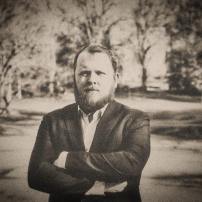
Michael McQuarrie is currently serving on the OOW Council. Michael is an associate professor in the Department of Sociology at the London School of Economics. His research is primarily concerned with the transformation of urban politics, governance, and civil society since 1973. He demonstrates this both by showing how the meaningful content of political values and practices, such as community and participation, have been transformed, but also how these changes are linked to the changing nature of governance, changing organizational populations, and the outcome of political conflicts. He has authored numerous articles and co-edited two volumes on related themes: Remaking Urban Citizenship: Organizations, Institutions, and the Right to the City (with Michael Peter Smith), and Democratizing Inequalities: The Promise and Pitfalls of the New Public Participation (with Caroline Lee and Edward Walker, 2014). Currently, he is preparing a book manuscript entitled The Community Builders which summarizes his research on the trajectory of community-based organizations in urban authority and governance over the last forty years. Below, Michael discusses his key influences, the challenges that he sees OOW scholars facing, and what he looks forward to at ASA 2019.
The ILR School at Cornell University invites applications for a two-year Postdoctoral Fellowship in Organizational Behavior, to begin August 2019. Applicants should have completed their PhD in organizational behavior, management, psychology, sociology, or a closely-related field by the time of appointment.
The Postdoctoral Fellow will actively contribute to the research mission of the ILR School, including working on joint projects with OB faculty while also moving their own independent research projects toward publication. The Postdoctoral Fellow is also expected to teach one course during the two-year appointment.
Please see this call for applications for two vacant PhD fellowships (within the fields of economic sociology, political economy, and the sociology of professions) in the Department of Organization at the Copenhagen Business School.
These positions are fully funded for three years. The funding comes from the Velux Foundation (on research) and the Copenhagen Business School (on teaching).
These positions are part of the new NICHE project, funded by the Velux Foundation, on how expert networks develop to foster markets.
Migration, or the movement of people across national borders for either permanent or temporary settlement, is one of the defining issues of our time. Despite its importance, migration has not been emphasized in the study of management and organizations. Existing research from other disciplines has focused on “macro” or policy issues. For instance, many studies explore whether low-skill immigrants affect the employment and wages of native workers (Card, 1990; Borjas, 1994; Peri and Sparber, 2009). Other work focuses on how high-skill immigrants create clusters of knowledge and entrepreneurship at the regional or national level (Saxenian, 2006; Kerr, 2019). Yet other research focuses on the role migration plays in cross-border trade and investment (Gould, 1994; Leblang, 2010). These precedents suggest that migration is an important factor affecting the mobility of labor, knowledge, and capital – i.e., the very resources upon which organizations and their managers rely to survive, grow, and innovate.
As part of our January newsletter, Fauzia Husain contributes a piece on what corruption studies can teach us about the flow of power in organizations, informed by her research in Pakistan. Fauzia Husain is a PhD candidate at the University of Virginia. Her work explores the local and global dynamics of gender, agency and power through a focus on state security. She is also one of the organizers of JTS 2019.
Over the years several studies have shown gender and corruption to be related, with rates of corruption falling as women’s participation in government rises. Some scholars assume that this relationship is based on gendered traits. Corruption, they argue, is gendered because women are more prone to honesty and good civic sense. Others suggest that not essential gender traits but systemic factors explain the relationship between gender and corruption—it is liberal democracy that explains both, gender integration as well as honest government. In the course of fieldwork with women police in Pakistan, however, I found that the gendered character of corruption might be the outcome not of quantity or propensity but of opportunity and quality. In other words, both men and women do corruption, they just do it differently.
Help honor a student’s achievements! Consider nominating your best students for the ASA Dissertation Award. The nomination deadline is January 31, 2019.
 and civil society since 1973. He demonstrates this both by showing how the meaningful content of political values and practices, such as community and participation, have been transformed, but also how these changes are linked to the changing nature of governance, changing organizational populations, and the outcome of political conflicts. He has authored numerous articles and co-edited two volumes on related themes:
 Organizations, Occupations and Work