OOW Newly Minted PhDs

Congratulations to all recent PhD graduates! As part of our June newsletter, we profile several newly minted PhDs with OOW-focused research. Learn more about recent graduates, Pete Aceves, Alaz Kilicaslan, Jennifer Nelson and Letian Zhang below.

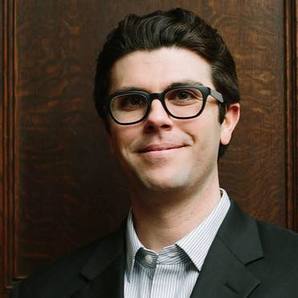
Pedro (Pete) Acevesaceves-pete_1
Contact information
http://www.peteaceves.com
peteaceves@uchicago.edu
pedro.aceves@unibocconi.it

Education
Ph.D., University of Chicago, Department of Sociology (2018)

Future affiliation
Assistant Professor, Department of Management and Technology, Bocconi University (starting September 2018)

Selected publications and/or awards

  • Evans, James A., and Pedro Aceves. 2016. “Machine Translation: Mining Text for Social Theory.” Annual Review of Sociology.
  • 2017 INFORMS/Organization Science Dissertation Proposal Competition Winner
  • NSF DDRI Grant

Research description
My research investigates how social, linguistic, and technological factors influence processes of collective cognition, and how these processes then affect organizational and market outcomes. In my dissertation, I bring the principle of linguistic relativity into sociological territory by arguing that differences in the structure of language don’t just affect patterns of individual-level cognition, but also affect patterns of social interaction and group behavior. I first created a novel language structure measure that I call information density, which is the average degree to which a language packs conceptual information into its words. I then theorize the effect that information density should have on group performance, arguing that high information density languages facilitate movement through the conceptual space as groups converse. This ease of movement through conceptual space should then lead groups speaking more informationally dense languages to traverse a larger area of the conceptual space, have more and better ideas during creativity tasks, generate better justifications for their decisions during judgement tasks, and ultimately to exhibit superior performance during long-lived group projects. I trace the effects of language information density on the performance of 240 groups in a lab study in India and on the performance of mountaineering expeditions to the Himalayas. My ongoing work seeks to continue this exploration of the deep interstices of social interaction and collective cognition, bridging multiple disciplinary domains, including organization theory, economic sociology, cognitive science, linguistics, and information theory.


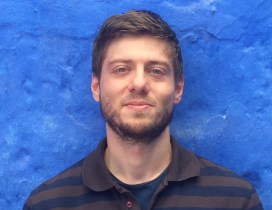
Alaz KilicaslanAlaz
Contact information
alazkaslan@yahoo.com

Education
Ph.D., Boston University, Department of Sociology (2018)

Future affiliation 
Assistant Professor of Global Health in the Department of Sociology, Criminology & Anthropology at the University of Wisconsin-Whitewater (starting August, 2018)

Selected publications and/or awards

  • Early Career Workshop Award (Awarded by the Society for the Advancement of Socio-economics)

Research description 
My research bridges medical sociology, economic sociology, and organizational studies to understand how healthcare is delivered, and who has access to it, in a global context. More specifically, I study the moral economy of healthcare by examining how government agencies, medical professionals, and clients negotiate and ultimately shape the healthcare delivery through interactions in organizational settings. I have two ongoing research projects. My dissertation research is an ethnography of healthcare reform in Turkey and explores the organizational dynamics of the reform by focusing on the shifting work patterns of medical professionals and doctor-patient relationships. I found that the reform process, which combines neoliberal logics with an expansion of access to services culminated into a model I term “fast health”, involving a decline in the quality of healthcare encounters, overworked doctors, and a gradual marketization of services. My second project continues to examine the moral economy of health services by turning to migration of African-origin immigrants to Turkey, part of the current Mediterranean migrant crisis. I focus on how a visible racial minority group navigates the complexities of healthcare and how immigrants’ racial, ethnic, and religious identities impact their access.

Teaching interests/experience
My teaching specializations are sociology of health and medicine, economic sociology, organizational studies, and social inequalities, with an additional expertise in the society and politics of the Middle East. At Boston University, I have taught undergraduate seminars “Sociology of Health and Medicine” and “Economic Sociology” and served as a teaching assistant for six semesters in several classes, including “Introduction to Sociology” and “Leading Organizations and People”.


Jennifer NelsonEmory-Nelson_8213

Contact information

Jennifer L. Nelson


j.l.nelson@emory.edu
jlnelso@gmail.com

Education 
Ph.D., Emory University, Department of Sociology (2018)

Future affiliation 
Postdoctoral Fellowship in Research on School Leadership
Vanderbilt University
Peabody College of Education
Department of Leadership, Policy, and Organizations

Selected publications

  • Nelson, Jennifer L., and Amanda E. Lewis. 2016. “‘I’m a Teacher, Not a Babysitter:’ Workers’ Strategies for Managing Identity-Related Denials of Dignity in the Early Childhood Workplace.” Research in the Sociology of Work 29: 37-71.
  • Nelson, Jennifer L. 2017. “Pathways to Green(er) Pastures: Reward Bundles and Turnover Decisions in a Semi-Profession.” Qualitative Sociology 40(1):23–57. doi:10.1007/s11133-016-9348-1

Research description
I study how aspects of the organizational environment – including demographic composition, spatial arrangements, and managerial practices – impact workers’ outcomes of coworker support, job satisfaction, and turnover. I study people within organizations using methods such as QCA, employee surveys, and comparative ethnographic studies. To date, my empirical context has been education across a wide range of organizational workplace settings. In previous work, I have studied how work rewards bundle to predict staying and leaving decisions, as well as how client populations impact work identity. These studies appear in Qualitative Sociology and Research in the Sociology of Work (with Amanda Lewis), respectively.

Building on these prior projects, in my dissertation, I examine how management practices in schools shape teachers’ coworker ties. This work is based on a year of ethnographic observation, teacher interviews, and panel surveys across several high schools. In other papers, with coauthors I examine the justice antecedents of coworker trust; how racial distance from colleagues shapes experiences of culture shock at work; and how front- and back-stage spaces in the workplace shape workers’ presentation of self.

Teaching experience/interests
Undergraduate courses: Sociology of Work, Introduction to Sociology, Sociology of Education
Dean’s Teaching Fellow, Emory University (accepted)
Andrew Mellon Foundation Graduate Teaching Fellowship (declined)
3 years as a public high school teacher through the Mississippi Teacher Corps (2008-2011)


Letian (LT) ZhangLT

Contact information
http://www.letianzhang.com
letian.lt.zhang@gmail.com 

Education
Ph.D., Harvard University, Department of Sociology (2018)

Future affiliation
Assistant Professor, Harvard Business School (starting July, 2018)

Selected publications

  • Zhang, Letian. “A Fair Game? Racial bias and repeated interaction between NBA coaches and players.” Administrative Science Quarterly 62.4 (2017): 603-625.

Dissertation description  
My dissertation, titled Race and Status Dynamics in the NBA, explores racial bias and status formation in NBA basketball. In one chapter, I show that a NBA player receives more playing time under a same-race coach than a different-race coach, even though there is no difference in his performance. However, this racial bias is greatly reduced as the player and the coach spend more time on the same team, suggesting that repeated interaction minimizes coaches’ biases toward their players. But it does not reduce coaches’ racial biases in general. Even after years of coaching other-race players, coaches still exhibit the same levels of racial bias as they did upon first entering the league. These results suggest that repeated workplace interaction is effective in reducing racial bias toward individuals but not toward groups.

Meet Your Council: Elizabeth Popp Berman

Popp-Berman1b(1)Elizabeth Popp Berman is currently serving on the OOW Council.  Berman is Associate Professor of Sociology at the University of Albany, SUNY.  Her current book project, Thinking Like an Economist: How Economics Became the Language of U.S. Public Policy (Princeton University Press), examines the role of economics in the development of science, antitrust and antipoverty policy in the U.S. from 1960 to 1985.  Her first book, Creating the Market University: How Academic Science Became an Economic Engine (Princeton University Press, 2012) earned the OOW’s Max Weber Book Award in 2013.  Below, Berman expands upon her research and teaching, as well as her thoughts on the state of the subfield.  Continue reading “Meet Your Council: Elizabeth Popp Berman”

How work ethnographers are adapting to the changing nature of work

As part of our March newsletter, Benjamin Snyder comments on how ethnographers of work are responding to changes in the character of labor and employment.  Snyder is the author of The Disrupted Workplace (Oxford University Press, 2016) and a Lecturer in Sociology & Social Policy at Victoria University of Wellington.  He will join the Department of Anthropology and Sociology at Williams College in Fall 2018.  

In 2001, Stephen Barley and Gideon Kunda called upon organizational and work sociologists to revisit the field’s core concepts. Time, place, schedule, wage, job, career, employment, management, ownership, head versus hand, work versus leisure, and a host of other taken for granted ways of describing economic life under bureaucratic organizing, they argued, are increasingly obscured by new post-industrial forms. They prescribed a return to an older tradition of detailed ethnographic studies of work and workplaces to adapt to the changing times. Sit with working people. Watch what they do. Listen to what work means to them. Build new concepts. For ethnographically inclined sociologists of my generation, for whom this call was part of our introduction to the field in graduate school, this message felt like a warm welcome. Many of us took up the invitation. When I look out on the field now, almost two decades later, I get the sense that the seed Barley and Kunda planted has begun to bear fruit. Work-oriented ethnographers are deeply engaged in this much needed conceptual reconstruction.

Continue reading “How work ethnographers are adapting to the changing nature of work”

Sociological & Journalistic Approaches to Workplace Sexual Harassment

Stories of workplace sexual harassment and assault have dominated news headlines over the past year, as investigative journalists have focused on the high-profile cases with which we are now familiar. In the spirit of Herbert Gans’ recent ASA featured essay comparing the disciplines of journalism and sociology, we asked several journalists and sociologists how they approach this pertinent topic and whether and how closer ties might be mutually beneficial.

Read below to see about how sociologist, Christopher Uggen, and journalists, Gayle Golden and Vicki Michaelis, navigate these challenges, what they feel is being left out of public conversation, and what they hope results from the current public discourse.

Continue reading “Sociological & Journalistic Approaches to Workplace Sexual Harassment”

Meet your Council: Josh Seim and Benjamin Shestakofsky

Josh Seim and Benjamin Shestakofsky are the 2017-2018 OOW Council Student Representatives.  Learn more about their research and ties to the subfield below.

1) Where did your interests in organizations, occupations, and work originate? How have you found concepts and theories from this scholarship useful in your work?

Josh Seim: I’m broadly interested in how the poor are processed, regulated, or “governed” across a number of institutions. My first research project brought me into a penitentiary in Oregon where I was set on explicating the aspirations and actions of soon-to-be-released prisoners. There, I quickly realized that I would need to account for the internal organization of the facility if I hoped to make sense of what previous scholars described as a “perplexing optimism” among prisoners approaching the gate. I drew on the Gresham Sykes’ Society of Captives, Donald Clemmer’s The Prison Community, and other texts to examine my interview transcripts and field notes. While these books are not usually claimed by organizational sociology, they motivated me to consider how penal domination, a basic organizational feature of the prison, shaped inmate subjectivity.

Continue reading “Meet your Council: Josh Seim and Benjamin Shestakofsky”

Meet Your Council: Lisa Cohen

lisa_cohen_7697Lisa Cohen is currently serving on the OOW Section Council.  Cohen is an associate professor of organizational behavior at Desautels Faculty of Management, McGill University.  She was previously a faculty member at the London Business School, the Yale School of Management and the Graduate School of Management, University of California, Irvine.  Prior to her academic career, Cohen was Principal Consultant at Terranova Consulting Group/Right Management Consultants, a human resource and management consulting firm.  She earned her MBA from Fuqua School of Business, Duke University and her PhD from the Walter A. Haas School of Business, University of California, Berkeley.

Professor Cohen’s current research focuses on questions about how tasks are bundled into jobs and jobs bundled into organizations: how and why do jobs and organizations look the way they do, how do they change, and how do they influence organizational success?  Most recently she has examined these issues in startups. Her most recent paper, forthcoming in Academy of Management Journal, looks at the fit between top management jobs and experience and how these interact with firm development in technology startups.  She has additional projects examining hiring and unusualness in the top management structure of startups. She has published in Academy of Management Journal, Administrative Science Quarterly, American Journal of Sociology, American Sociological Review, and Organization Science.

Below, Cohen discusses her research motivations, career trajectory and future research.

Continue reading “Meet Your Council: Lisa Cohen”

Meet Your Council: Taekjin Shin

DSC_5265_color_smTaekjin Shin is currently serving on the OOW Section Council.  Shin is an Assistant Professor in the College of Business Administration at San Diego State University (SDSU).  Before joining SDSU, Shin was an Assistant Professor in the School of Labor and Employment Relations at the University of Illinois at Urbana-Champaign.  He received his Ph.D in sociology in 2008 from the University of California at Berkeley.
Shin’s research interests concern corporate governance, executive compensation, wage inequality, organizational sociology, and economic sociology. He is currently studying the institutional explanation for the rise of executive compensation and the symbolic effect of shareholder-value orientation on the career outcomes of executive managers.  Below, Shin expands upon his research and his professional experiences for the newsletter.

Continue reading “Meet Your Council: Taekjin Shin”

Meet Your Council: Ofer Sharone

ofer-sharone-jacketOfer Sharone is currently serving on the OOW Section Council.  Sharone is an Assistant Professor of sociology at the University of Massachusetts Amherst.  Before joining the faculty at UMass Amherst, he completed his Ph.D. in sociology at UC Berkeley and taught at the MIT Sloan School of Management.  He also holds a JD from Harvard Law School and previously practiced international law in San Francisco and Japan.

Sharone’s research focuses on career transitions, work and unemployment. His studies are primarily cross-national comparisons and utilize in-depth interviews and participant observations. His 2013 book, Flawed System/Flawed Self: Job Searching and Unemployment Experiences, compared the job searching and unemployment experiences of white-collar workers in Israel and the United States.  The book won the Zelizer Award in Economic Sociology and the Weber Award in Organizations, Occupations and Work.

Sharone is a co-founder of the Institute for Career Transitions, a non-profit organization whose mission is to “generate effective strategies, offer practical support, and increase public understanding of the challenges facing professionals in career transitions.”  His current research with the Institute focuses on strategies for supporting long-term unemployed job seekers. This research has received wide attention from national media and led to an invitation from the White House and the Department of Labor to participate in policy discussions on addressing long-term unemployment.

We are grateful to Dr. Sharone for taking the time to answer our questions below.

Continue reading “Meet Your Council: Ofer Sharone”

Meet Your Council: Elizabeth Hirsh

cropped-HirshElizabeth Hirsh is currently serving on the OOW Section Council.  Hirsh is Associate Professor of Sociology, Canada Research Chair in Inequality and Law, and Director of Graduate Studies in Sociology at the University of British Columbia.  Before joining the faculty at the University of British Columbia, she completed her PhD in Sociology at the University of Washington in 2006 and taught at Cornell University for four years.

Hirsh’s research expertise is in the areas of organizations, inequality, and the law.  Much of her work focuses on employment discrimination and the impact of antidiscrimination laws and corporate diversity policies on gender, race, and ethnic inequality in the workplace.  Hirsh’s work has appeared in top journals in sociology and law, including the American Sociological Review, the American Journal of Sociology, and the Law and Society Review. Hirsh teaches courses on work organizations, law, and social statistics.

Current projects include: a study of the economic, political, and organizational conditions under which employment discrimination lawsuits filed under U.S. civil rights laws bring about change in sex and race inequality in the workplace; a qualitative account of the factors that lead workers to file employment discrimination lawsuits based on interviews with plaintiffs in recent high-profile lawsuits; and an analysis of the impact of corporate diversity policies on levels of workplace sex and race inequality and discrimination disputes at work.

Below, Hirsh discusses her multidimensional research interests, the benefits and challenges offered by EEOC data and her upcoming research plans.

How did you become interested in studying employment discrimination?

The field of employment discrimination was an immediate draw for me because it allows for the study of both how inequality is produced and how it can be remedied in social settings.  The production question is complex, as it forces us to consider multiple causal factors, from organizational structure to culture to power and relationships.  The issue of remediation engages classic questions in law and society regarding access to justice and the impact of the law on equality and individual rights.  I’ve long been interested in questions of if and how the law can be equity-enhancing, and the study of employment discrimination provides a context to empirically examine this.  That – and as I bright-eyed new PhD student, my advisor sent me to the law library to dig up details on old discrimination lawsuits.  After getting lost in the stacks for a couple of hours, I was hooked.

You are very active in multiple subfields: organizational sociology, inequality, and law and society. How do you manage your scholarly identity across the boundaries? How do you remain active in different subfields?

Early in my career, I saw myself more as an inequality scholar who focuses on organizational inequities and laws designed to remedy them.  Now I see myself much more as an organizational sociologist who studies inequality and the law.  I’m sure my identity will continue to evolve.  I try to ask and answer questions that are at the nexus of these fields, as these are the questions that most interest me.  How do the empirical findings out of the organizational inequality tradition help us understand the reach and limits of the law?  What can insights from law and society say to those who study workplace inequality?  There is so much overlap in these fields that boundary crossing is easy.  Teaching in each area also keeps me active and (mostly) current in my subfields.

You have used establishment data from the U.S. Equal Employment Opportunity Commission (EEOC). What are some advantages and disadvantages (or challenges) of using EEOC data?

The establishment-level data from the EEOC are ideal for studying workplace compositional change over time as they are collected annually and go way back.  But the real promise of the data is in matching them to additional sources.  For instance, together with collaborators, I have matched the establishment level data to EEOC charge data, to litigation data, and to workplace survey data to explore how legal claims and diversity practices affect workplace composition.  When you start matching to additional data sources, the possibilities are endless.

Getting to know these data also opens up opportunities to contribute to policy discussions and practice, since the EEOC data sources are first and foremost a tool for legal compliance.  But therein lies the challenge: they aren’t collected for academic purposes, so you must be prepared for some data drudgery.

What are your research plans for the next 5-10 years?

To finish the many projects I’ve been working on for the last 5-10 years!  I also toy with the idea of bringing my work on discrimination claims and organizational change together in a book, mostly to show my nonacademic friends that we scholars actually do something.  But as an article writer, I’m not sure I have the stamina!