Member Publication: Choosing Bad Jobs: The Use of Nonstandard Work as a Commitment Device

Please check out the recent publication by OOW member Laura Adler:

Adler, Laura. 2020. “Choosing Bad Jobs: The Use of Nonstandard Work as a Commitment Device.” Work and Occupations, Online First.

Abstract

With nonstandard work on the rise, workers are increasingly forced into bad jobs—jobs that are low-paying, part-time, short-term, and dead-end. But some people, especially in cultural industries, embrace this kind of work. To understand why some might choose bad jobs when better options are available, this paper examines the job preferences of aspiring artists, who often rely on bad day jobs as they attempt to achieve economic success in the arts. Using interviews with 68 college-educated artists, I find that their preferences are informed not only by utility and identity considerations—two factors established in the literature—but also by the value of bad jobs as commitment devices, which reinforce dedication to career aspirations. The case offers new insights into the connection between jobs and careers and enriches the concept of the commitment device with a sociological perspective, showing that these devices are not one-time contracts but ongoing practices.

Member Publication: Profiting on Crisis: How Predatory Financial Investors Have Worsened Inequality in the Coronavirus Crisis

Please check out the recent publication by OOW members Megan Tobias Neely and Donna Carmichael:

Neely, Megan Tobias, and Donna Carmichael. 2021. “Profiting on Crisis: How Predatory Financial Investors Have Worsened Inequality in the Coronavirus Crisis.” American Behavioral Scientist, March, Online First.

Abstract

A once-in-a-century pandemic has sparked an unprecedented health and economic crisis. Less examined is how predatory financial investors have shaped the crisis and profited from it. We examine how U.S. shadow banks, such as private equity, venture capital, and hedge fund firms, have affected hardship and inequality during the crisis. First, we identify how these investors helped to hollow out the health care industry and disenfranchise the low-wage service sector, putting frontline workers at risk. We then outline how, as the downturn unfolds, shadow banks are shifting their investments in ways that profit on the misfortunes of frontline workers, vulnerable populations, and distressed industries. After the pandemic subsides and governments withdraw stimulus support, employment will likely remain insecure, many renters will face evictions, and entire economic sectors will need to rebuild. Shadow banks are planning accordingly to profit from the fallout of the crisis. We argue that this case reveals how financial investors accumulate capital through private and speculative investments that exploit vulnerabilities in the economic system during a time of crisis. To conclude, we consider the prospects for change and inequality over time.

Member Publication: The Gendered Politics of Pandemic Relief: Labor and Family Policies in Denmark, Germany, and the United States During COVID-19

Please check out the recent publication by OOW members Nino Bariola and Caitlyn Collins:

Bariola, Nino, and Caitlyn Collins. 2021. “The Gendered Politics of Pandemic Relief: Labor and Family Policies in Denmark, Germany, and the United States During COVID-19.” American Behavioral Scientist, Online First.

Abstract

The COVID-19 pandemic has magnified families’ struggles to reconcile caregiving and employment, especially for working mothers. How have different countries reacted to these troubling circumstances? What policies have been implemented to alleviate the pernicious effects of the pandemic on gender and labor inequalities? We examine the policies offered in Denmark, Germany, and the United States, three countries that represent distinct welfare regimes. We find important differences among the policy solutions provided, but also in the “cultural infrastructures” that allow policies to work as intended, or not. In Denmark, a social-democratic welfare state, robust federal salary guarantee programs supplemented an already strong social safety net. The country was among the first to lock down and reorganize health care—and also among the first to reopen schools and child care facilities, acknowledging that parents’ employment depends on child care provisioning, especially for mothers. Germany, a corporatist regime, substantially expanded existing programs and provided generous subsidies. However, despite an ongoing official commitment to reduce gender inequality, the cultural legacy of a father breadwinner/mother caregiver family model meant that reopening child care facilities was not a first priority, which pushed many mothers out of paid work. In the U.S. liberal regime, private organizations—particularly in privileged economic sectors—are the ones primarily offering supports to working parents. Patchwork efforts at lockdown and reopening have meant a lengthy period of limbo for working families, with disastrous consequences for women, especially the most vulnerable. Among such varied “solutions” to the consequences of the pandemic, those of liberal regimes seem to be worsening inequalities. The unprecedented nature of the current pandemic recession suggests a need for scholars to gender the study of economic crises. 

Member Publication: Unemployment Experts: Governing the Job Search in the New Economy

Please check out the recent publication by OOW member Patrick Sheehan:

Sheehan, Patrick. 2021. “Unemployment Experts: Governing the Job Search in the New Economy.” Work and Occupations, Online First.

Abstract

In recent years, sociologists have examined unemployment and job searching as important arenas in which workers are socialized to accept the terms of an increasingly precarious economy. While noting the importance of expert knowledge in manufacturing the consent of workers, research has largely overlooked the experts themselves that produce such knowledge. Who are these experts and what kinds of advice do they give? Drawing on interviews and ethnographic fieldwork conducted at three job search clubs, the author develops a three-fold typology of “unemployment experts”: Job Coaches present a technical diagnosis that centers mastery of job-hunting techniques; Self-help Gurus present a moral diagnosis focused on the job seeker’s attitude; and Skill-certifiers present a human capital diagnosis revolving around the job seeker’s productive capacities. By offering alternative diagnoses and remedies for unemployment, these experts give job seekers a sense of choice in interpreting their situation and acting in the labor market. However, the multiple discourses ultimately help to secure consent to precarious labor markets by drawing attention to a range of individual deficiencies within workers while obfuscating structural and relational explanations of unemployment. The author also finds that many unemployment experts themselves faced dislocations from professional careers and are making creative claims to expertise. By focusing on experts and their varied messages, this paper reveals how the victims of precarious work inadvertently help to legitimate the new employment regime.

Member Publication: How Information about Inequality Impacts Belief in Meritocracy

Please check out the recent publication by OOW member Jonathan J.B. Mijs:

Mijs, Jonathan J.B. and Christopher Hoy. 2021. “How Information about Inequality Impacts Belief in Meritocracy: Evidence from a Randomized Survey Experiment in Australia, Indonesia and Mexico.” Social Problems, Online First.

Abstract

Most people misperceive economic inequality. Learning about actual levels of inequality and social mobility, research suggests, heightens concerns but may push people’s policy preferences in any number of directions. This mixed empirical record, we argue, reflects the omission of a more fundamental question: under what conditions do people change their understanding of the meritocratic or non-meritocratic causes of inequality? To explore mechanisms of belief change we field a unique randomized survey experiment with representative populations in Australia, Indonesia, and Mexico—societies with varying levels of popular beliefs about economic inequality. Our results highlight the importance of information, perceived social position, and self-interest. In Indonesia, information describing (high) income inequality and (low) social mobility rocked our participants’ belief in meritocracy. The same information made less of a splash in Mexico, where unequal outcomes are commonly understood as the result of corruption and other non-meritocratic processes. In Australia, the impact of our informational treatment was strongest when it provided justification for people’s income position or when it corrected their perception of relative affluence. Our findings reveal asymmetric beliefs about poverty and wealth and heterogeneous responses to information. They are a call to rethink effective informational and policy interventions.

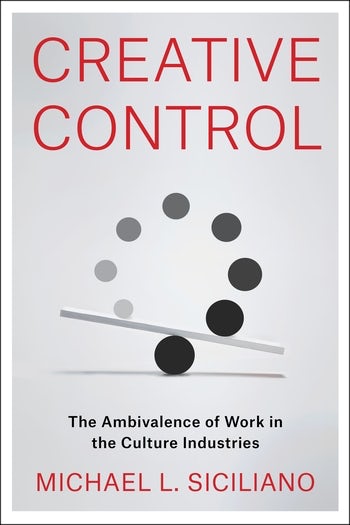
Member Publication: Creative Control: The Ambivalence of Work in the Culture Industries

Please check out the recent publication by OOW member Michael Siciliano.

Siciliano, Michael L. 2021. Creative Control: The Ambivalence of Work in the Culture Industries. Columbia University Press. 

Here is a short description of the book:

Workers in cultural industries often say that the best part of their job is the opportunity for creativity. At the same time, profit-minded managers at both traditional firms and digital platforms exhort workers to “be creative.” Even as cultural fields hold out the prospect of meaningful employment, they are marked by heightened economic precarity. What does it mean to be creative under contemporary capitalism? And how does the ideology of creativity explain workers’ commitment to precarious jobs?

Michael L. Siciliano draws on nearly two years of ethnographic research as a participant-observer in a Los Angeles music studio and a multichannel YouTube network to explore the contradictions of creative work. He details how such workplaces feature engaging, dynamic processes that enlist workers in organizational projects and secure their affective investment in ideas of creativity and innovation. Siciliano argues that performing creative labor entails a profound ambivalence: workers experience excitement and aesthetic engagement alongside precarity and alienation. Through close comparative analysis, he presents a theory of creative labor that accounts for the roles of embodiment, power, alienation, and technology in the contemporary workplace.

Combining vivid ethnographic detail and keen sociological insight, Creative Control explains why “cool” jobs help us understand how workers can participate in their own exploitation.

You can find more about the book and buy it on the Columbia University Press website.

Member Publication: Unmasking work-family balance barriers and strategies among working fathers in the workplace

Please check out the recent publication by OOW members Sabrina Tanquerel and Marc Grau-Grau.

Tanquerel, Sabrina, and Marc Grau-Grau. 2020. “Unmasking Work-Family Balance Barriers and Strategies among Working Fathers in the Workplace.” Organization 27 (5): 680–700.

Abstract:

This article explores the barriers and strategies experienced by Spanish working fathers regarding work-family balance. Based on 29 in-depth interviews with Spanish working fathers in different types of organizations and sectors, the results of this study present different barriers that are divided into three groups: contextual barriers, organizational barriers and internalized barriers. The results also suggest that the study’s participants fall into three categories or patterns: hegemonic gender order conformers, borderers and deviants, who use three different strategies (no strategies, invisible strategies and visible strategies) to overcome the barriers detected in this research. The dynamics of reinforcing, being complicit and challenging hegemonic masculinities within the workplace are discussed in light of recent theories regarding gender and organizations, masculinities and fatherhood.

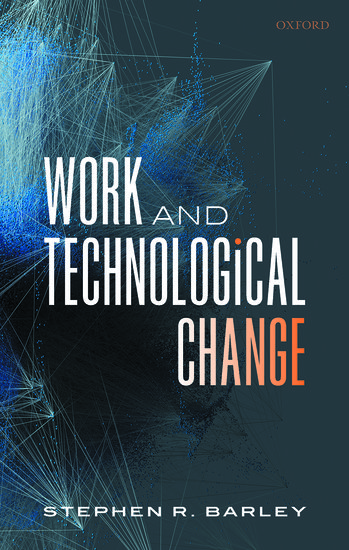
Member Publication: Work and Technological Change

Please check out the recent publication by OOW member Stephen R. Barley.

Barley, Stephen R. 2020. Work and Technological Change. Oxford University Press.

Here is a short description of the book:

In recent years a growing number of commentators have declared that we are at the beginning of a technical revolution that will see profound changes in the way we live and work. Yet what constitutes a technological revolution, and what logic supports how successive technological revolutions have unfolded in Western societies? How do technologies change organizations and what are the implications of intelligent technologies for work and employment?

Here, Stephen R. Barley reflects on over three decades of research to explore both the history of technological change and the approaches used to investigate how technologies are shaping our work and organizations. He begins by placing current developments in artificial intelligence into the historical context of previous technological revolutions, drawing on William Faunce’s argument that the history of technology is one of progressive automation of the four components of any production system: energy, transformation, transfer, and control technologies. He then considers how technologies change work, and when those changes will and will not result in organizational change. In doing so he lays out a role-based theory of how technologies produce changes in organizations. He then tackles the issue, alongside Matt Beane, of how to conceptualize a more thorough approach to assessing how intelligent technologies, such as artificial intelligence, can shape work and employment. They identify the main reasons why the current state of research on intelligent technologies in the workplace is inadequate, and provide pointers on how empirical studies in this area may, and must, be improved. He concludes with a discussion with his long-time colleague Diane Bailey about the fears that arise when one sets out to study technical work and technical workers, and the methods that they, and future ethnographers, can use for controlling those fears.

You can find more about the book and buy it on the Oxford University Press website.

Member Publication: The Career Conveyor Belt: How Internships Contribute to Early Career Inequality Among College Graduates

Please check out the recent publication by OOW member Corey Moss-Pech.

Moss-Pech, Corey. 2020. “The Career Conveyor Belt: How Internships Contribute to Early Career Inequality Among College Graduates,” Qualitative Sociology, Online First.

Abstract

Progressing quickly from school to work is an indicator of early career success for college graduates. Recent research shows that inter-institutional connections between elite universities and prestigious employers easily move students at these schools into a select few firms. Prior research has yet to fully address whether students at non-elite colleges have differential access to connections between their colleges and potential employers. Drawing on 176 longitudinal interviews with students across four majors, I track 91 seniors who have all completed internships as they graduate and enter the labor market. In doing so, I document the inter-institutional connections through which employers recruit some students for internships that often lead directly to permanent employment opportunities, a process I call the career conveyor belt. Career conveyor belt internships have procedures in place to hire some, or all, of their interns immediately following graduation. Students that must find their own internships rarely end up in career conveyor belt internships, and they often spend 3–6 months job-searching after school ends before finding full-time work. Analysis reveals that college major plays a critical role in determining which students access career conveyor belt internships. These findings suggest students’ differential access to inter-institutional connections between schools and employers produce unequal labor market outcomes between college graduates by major.

Member Publication: How to Sell a Friend: Disinterest as Relational Work in Direct Sales

Please check out the recent publication by OOW member Curtis Child:

Child, Curtis. 2021. “How to Sell a Friend: Disinterest as Relational Work in Direct Sales.” Sociological Science 8: 1-25.

Abstract

Economic sociologists agree that monetary transactions are not necessarily antithetical to meaningful social relationships. However, they also accept that creating “good matches” between the two requires hard work. In this article, I contribute to the relational program in economic sociology by examining a common but understudied type of work in which one party to a relationship stands to benefit from it financially. I identify in these highly commercialized contexts a particular style of relational work anticipated, but not fully developed, in Pierre Bourdieu’s writings: disinterest. I argue that the disinterested style is manifest by economically implicated individuals who downplay their objectively apparent economic interests in order to preserve or encourage good feelings about a relationship that is meaningful to them. Drawing upon data from the direct selling industry, I show how distributors use disinterest to navigate their work.