
As part of our February newsletter, Nicholas Membrez-Weiler contributes a piece on teaching the sociology of organizations to undergraduate students. Nicholas is a PhD student at North Carolina State University. His work examines the social dynamics of organizational wrongdoing and corporate crime, with current projects focused on the problem of wage theft. He is involved in several projects with topics ranging from transnational mobilization and contested illness, franchise organizations and the fissured workplace, and shifting work relations in the platform/gig-economy.
When I started teaching the sociology of organizations, I noticed that students seemed particularly resistant to letting go of their implicit assumptions about organizations. Most students come into the sociology of organizations with some prior experience in sociology, usually an introductory or social problems course, where they learned to question many of their taken-for-granted assumptions about social life. Students learn early on about the socially constructed nature of race, gender, and class. We drill Mills’ (1959) Sociological Imagination into their heads and teach the importance of connecting biography and history, the macro and the micro, in order to better understand both.
But what of the meso? Formal organizations have come to dominate society, yet organizational dynamics remain invisible within most introductory sociology courses. As I quickly realized in my first go at teaching organizations, my students come with a great grounding in sociology and an understanding of important sociological concepts, yet certain images of organizations seem persistent and immovable in their minds. Especially entrenched are ideas about efficiency as an organizational goal rather than the means to reach that goal and the belief that productive organizations’ primary goal is (and should be) profit. In attempting to address these misconceptions, and in order to present a more complete introduction to the scholarship on organizations, I employ two strategies: semester-long observations of the same organization, and constant experiential immersion in the classroom.
Continue reading “Invited Essay: Teaching the Organizational Imagination”
 and civil society since 1973. He demonstrates this both by showing how the meaningful content of political values and practices, such as community and participation, have been transformed, but also how these changes are linked to the changing nature of governance, changing organizational populations, and the outcome of political conflicts. He has authored numerous articles and co-edited two volumes on related themes:


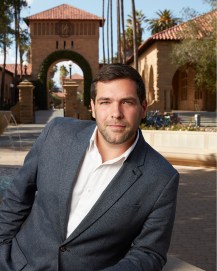 . His research interests include race and gender stratification, labor markets, and economic and organizational sociology. Specifically, his research agenda examines the consequences of nonstandard, contingent, and precarious employment for workers’ social and economic outcomes as well as the processes leading to race and gender labor market stratification. David’s research has appeared in American Sociological Review, American Journal of Sociology, Social Forces, and other academic journals. His work has been supported by the National Science Foundation, the Russell Sage Foundation, and the W.K. Kellogg Foundation, among other organizations. He received in Ph.D. in Sociology and Social Policy from Princeton University. Below, David shares his thoughts on exciting areas in the subfield, as well as conference advice just in time for ASA.
  Organizations, Occupations and Work