Member Publications

Please check out the recent publications by OOW member Megan Tobias Neely:

2020. “The Portfolio Ideal Worker: Insecurity and Inequality in the New Economy.” Qualitative Sociology 43 (2).

2020. “Essential and Expendable: Gendered Labor in the Coronavirus Crisis.” Palo Alto: Clayman Institute for Gender Research, Stanford University.

2020. “What Will U.S. Labor Protections Look Like After Coronavirus?Harvard Business Review, April 2, 2020.

Member Publication: Crunch Time: How Married Couples Confront Unemployment

Please check out the recent publication by OOW member Aliya Hamid Rao. 2020. Crunch Time: How Married Couples Confront Unemployment. Oakland: University of California Press.

Here is a short description of the book:

In Crunch Time, Aliya Hamid Rao gets up close and personal with college-educated, unemployed men, women, and spouses to explain how comparable men and women have starkly different experiences of unemployment.

Traditionally gendered understandings of work—that it’s a requirement for men and optional for women—loom large in this process, even for marriages that had been not organized in gender-traditional ways. These beliefs serve to make men’s unemployment an urgent problem, while women’s unemployment—cocooned within a narrative of staying at home—is almost a non-issue. Crunch Time reveals the minutiae of how gendered norms and behaviors are actively maintained by spouses at a time when they could be dismantled, and how gender is central to the ways couples react to and make sense of unemployment.

Order online from the UC Press website and save 30% when you use source code 17M6662 at checkout.

Member Publication: National Family Policies and Mothers’ Employment: How Earnings Inequality Shapes Policy Effects across and within Countries

Please check out the recent publication by OOW members Jennifer L. Hook and Eunjeong Paek. 2020. “National Family Policies and Mothers’ Employment: How Earnings Inequality Shapes Policy Effects across and within Countries.” American Sociological Review. Online First.

Abstract

Although researchers generally agree that national family policies play a role in shaping mothers’ employment, there is considerable debate about whether, how, and why policy effects vary across country contexts and within countries by mothers’ educational attainment. We hypothesize that family policies interact with national levels of earnings inequality to differentially affect mothers’ employment outcomes by educational attainment. We develop hypotheses about the two most commonly studied family policies—early childhood education and care (ECEC) and paid parental leave. We test these hypotheses by establishing a novel linkage between the EU-Labour Force Survey and the Current Population Survey 1999 to 2016 (n = 23 countries, 299 country-years, 1.2 million mothers of young children), combined with an original collection of country-year indicators. Using multilevel models, we find that ECEC spending is associated with a greater likelihood of maternal employment, but the association is strongest for non-college-educated mothers in high-inequality settings. The length of paid parental leave over six months is generally associated with a lower likelihood of maternal employment, but the association is most pronounced for mothers in high-inequality settings. We call for greater attention to the role of earnings inequality in shaping mothers’ employment and conditioning policy effects.

Member Publication: Who to Blame and How to Solve It: Mothers’ Perceptions of Work–Family Conflict Across Western Policy Regimes

Please check out the recent publication by OOW member Caitlyn Collins. 2020. “Who to Blame and How to Solve It: Mothers’ Perceptions of Work–Family Conflict Across Western Policy Regimes.” Journal of Marriage and Family 82 (3): 849–74.

Abstract:

Objective

This study compares mothers’ perceptions of work–family conflict in four countries that exemplify different work–family policy approaches: Sweden, Germany, Italy, and the United States.

Background

Scholars have examined the impact of culture and work–family policy on mothers cross‐nationally, primarily using quantitative methods. Thus, sociologists have a good understanding of both work–family policy structures and outcomes, but the intervening processes that play out in working mothers’ daily lives are not well understood.

Method

This article begins to fill this gap, drawing on interviews with 109 middle‐class employed mothers in Stockholm, Berlin, Rome, and Washington, D.C. The author investigates how work–family conflict is mitigated—or not—in countries with policies that reflect different ideals of motherhood, employment, and gender equality.

Results

Interviews reveal confirming evidence of cross‐national variation in mothers’ levels or perceived scope of conflict. Mothers also (a) attribute blame for their work–family conflict to different sources and (b) employ different solutions to resolve it.

Conclusion

Work–family conflict is not an inevitable feature of contemporary life. Rather, it is the product of public policies and cultural attitudes that shape women’s desires, expectations, and behaviors regarding work and family. Elucidating the processes of perception, attribution, and resolution is crucial to understand the political and cultural conditions that facilitate the combination of motherhood and employment.

ILR Review: Open Access of Current Issue about Gender & Employment Relations

See below a message from Rosemary Batt and Lawrence Kahn, editors of ILR Review:

Friends,

Please take advantage of free downloads of all articles and book reviews in our May special issue on gender and employment relations. Good through June 20, 2020.

The May issue continues our long term interest in and commitment to research on gender and the employment relationship.  It includes research on the impact of sexual orientation on labor market outcomes, gender quotas on corporate boards, the behavior of female managers, and the intersection of religious and gender discrimination.  In addition, the issue includes research on the appropriate use of statistics in assessing the extent of discrimination based on race and gender.  The papers in this issue use unique data and state of the art methods to study an area of great policy importance and public interest.

Also note our special book review section on

Technological Encounters: How New Writing on Technology Can Inform Modern Labor Studies (guest editors Steve Viscelli and Beth Gutelius)

We hope you are well during this difficult crisis.

Sincerely,

Rose Batt and Larry Kahn

If you have any difficulty gaining access to articles, please contact Tom Rushmer for your special editorial board member access link – (tsr33@cornell.edu)

ILR Review Volume: 73, Number: 3 (May 2020)

Articles

Transgender Status, Gender Identity, and Socioeconomic Outcomes in the United States
Christopher S. Carpenter, Samuel T. Eppink, and Gilbert Gonzales

Abstract: This article provides the first large-scale evidence on transgender status, gender identity, and socioeconomic outcomes in the United States, using representative data from 35 states in the Behavioral Risk Factor Surveillance System (BRFSS), which asked identical questions about transgender status and gender identity during at least one year from 2014 to 2017. More than 2,100 respondents, aged 18 to 64 years, identified as transgender. Individuals who identify as transgender are significantly less likely to be college educated and less likely to identify as heterosexual than are individuals who do not identify as transgender. Controlling for these and other observed characteristics, transgender individuals have significantly lower employment rates, lower household incomes, higher poverty rates, and worse self-rated health compared to otherwise similar men who are not transgender.

Multiple Discrimination against Female Immigrants Wearing Headscarves
Doris Weichselbaumer

Abstract: Western countries have experienced a large influx of Muslim immigrants, and concomitantly the Muslim headscarf has become the subject of major controversy. Drawing on theories of stigma, social identity, and multiple discrimination/intersectionality, this study examines the effect of wearing this headscarf in the German labor market. The author applies the method of correspondence testing that allows measuring discrimination in a controlled field setting. Findings show that when applying for a job in Germany, women with a Turkish migration background are less likely to be invited for an interview, and the level of discrimination increases substantially if the applicant wears a headscarf. The results suggest that immigrant women who wear a headscarf suffer discrimination based on multiple stigmas related to ethnicity and religion.

Hukou Status and Individual-Level Labor Market Discrimination: An Experiment in China
Uwe Dulleck, Jonas Fooken, and Yumei He

Abstract: This article examines discrimination based on hukou status, a legal construct that segregates locals and migrants in urban China. Local and migrant household helpers were recruited as experimental participants to interact in a standard gift exchange game (GEG) as well as a new variant of the GEG, called the wage promising game (WPG). The WPG uses non-binding wage offers and final wages that employers set after observing effort. In the GEG, both statistical and preference-based discrimination may motivate employers to offer lower wages to migrants than to locals, whereas in the WPG the statistical motive is excluded. Results reveal discrimination against migrants and show that preference-based discrimination is an important employer motive.

The Relationship between Prejudice and Wage Penalties for Gay Men in the United States
Ian Burn

Abstract: This article estimates the empirical relationship between prejudicial attitudes toward homosexuality and the wages of gay men in the United States. It combines data on prejudicial attitudes toward homosexuality from the General Social Survey with data on wages from the U.S. Decennial Censuses and American Community Surveys—both aggregated to the state level. The author finds that a one standard deviation increase in the share of individuals in a state who are prejudiced toward homosexuals is correlated with a decrease in the wages of gay men of between 2.7% and 4.0%. The results also suggest that the prejudice of managers is responsible for this correlation. The author finds that a one standard deviation increase in the share of the managers in a state who are prejudiced toward homosexuals is associated with a 1.9% decrease in the wages of gay men. The author finds no evidence that the wage penalty for gay men is correlated with the prejudice of customers or co-workers.

Are Female Managers More Likely to Hire More Female Managers? Evidence from Germany
Mario Bossler, Alexander Mosthaf, and Thorsten Schank

Abstract: This article investigates whether there is state dependence in the gender composition of managers in German establishments; that is, whether the number of hired female managers depends on the past hiring decisions of an establishment. Using administrative data, the authors apply dynamic linear models, thereby accounting for unobserved heterogeneity and the endogeneity of lagged dependent variables. Results show that hiring female managers leads to the hiring of more female managers in the subsequent period. Hiring rates for male managers follow a similar pattern in that they are more likely to hire more male managers.

Winner of the 2019 Best Paper Competition:

LERA/ILR Review Special Series in Employment Relations

Average Gaps and Oaxaca–Blinder Decompositions: A Cautionary Tale about Regression Estimates of Racial Differences in Labor Market Outcomes
Tymon Słoczyński

Abstract: Using a recent result from the program evaluation literature, the author demonstrates that the interpretation of regression estimates of between-group differences in wages and other economic outcomes depends on the relative sizes of subpopulations under study. When the disadvantaged group is small, regression estimates are similar to the average loss for disadvantaged individuals. When this group is a numerical majority, regression estimates are similar to the average gain for advantaged individuals. The author analyzes racial test score gaps using ECLS-K data and racial wage gaps using CPS, NLSY79, and NSW data, and shows that the interpretation of regression estimates varies substantially across data sets. Methodologically, he develops a new version of the Oaxaca–Blinder decomposition, in which the unexplained component recovers a parameter referred to as the average outcome gap. Under additional assumptions, this estimand is equivalent to the average treatment effect. Finally, the author reinterprets the Reimers, Cotton, and Fortin decompositions in the context of the program evaluation literature, with attention to the limitations of these approaches.

Occupational Skill Mismatch: Differences by Gender and Cohort
John T. Addison, Liwen Chen, and Orgul D. Ozturk

Abstract: The authors deploy a measure of occupational mismatch based on the discrepancy between the portfolio of skills required by an occupation and the array of abilities possessed by the worker for learning those skills. Using data from the Occupational Information Network (O*NET) and the 1979 and 1997 National Longitudinal Survey of Youth (NLSY79 and NLSY97), they report distinct gender differences in match quality and changes in match quality over the course of careers. They also show that a substantial portion of the gender wage gap stems from match quality differences among the college educated. College-educated females show a significantly greater likelihood of mismatch than do males. Moreover, individuals with children and those in more flexible occupations tend to experience a larger degree of mismatch. Cohort effects are also evident in the data: College-educated males of the younger cohort (NLSY97) are worse off in terms of match quality compared to the older cohort (NLSY79), even as the younger cohort of women is doing better on average.

Where Women Make a Difference: Gender Quotas and Firms’ Performance in Three European Countries
Simona Comi, Mara Grasseni, Federica Origo, and Laura Pagani

Abstract: The authors study the effect of corporate board gender quotas on firm performance in France, Italy, and Spain. The identification strategy exploits the exogenous variation in mandated gender quotas within country and over time and uses a counterfactual methodology. Using firm-level accounting data and a difference-in-difference estimator, the authors find that gender quotas had either a negative or an insignificant effect on firm performance in the countries considered with the exception of Italy, where they find a positive impact on productivity. The authors then focus on Italy. Using a novel data set containing detailed information on board members’ characteristics, they offer possible explanations for the positive effect of gender quotas. The results provide an important contribution to the policy debate about the optimal design of legislation on corporate gender quotas.

Book Reviews

Strong Governments, Precarious Workers: Labor Market Policy in the Era of Liberalization.
By Philip Rathgeb. Reviewed by Jens Arnholtz.

Beaten Down, Worked Up: The Past, Present, and Future of American Labor.
By Steven Greenhouse. Reviewed by Ruth Milkman.

Living and Dying on the Factory Floor: From the Outside In and the Inside Out.
By David Ranney. Reviewed by Robert Bruno.

Book Review Symposium

Technological Encounters: How New Writing on Technology Can Inform Modern Labor Studies
Steve Viscelli and Beth Gutelius.

Books Reviewed:

·   Artificial Unintelligence: How Computers Misunderstand the World. By Meredith Broussard.

·   Automating Inequality: How High-Tech Tools Profile, Police, and Punish the Poor. By Virginia Eubanks.

·   Ghost Work: How to Stop Silicon Valley from Building a New Global Underclass. By Mary L. Gray and Siddharth Suri.

·   Gigged: The End of the Job and the Future of Work. By Sarah Kessler.

·   Hustle and Gig: Struggling and Surviving in the Sharing Economy. By Alexandrea J. Ravenelle.

·   Weapons of Math Destruction: How Big Data Increases Inequality and Threatens Democracy. By Cathy O’Neil.

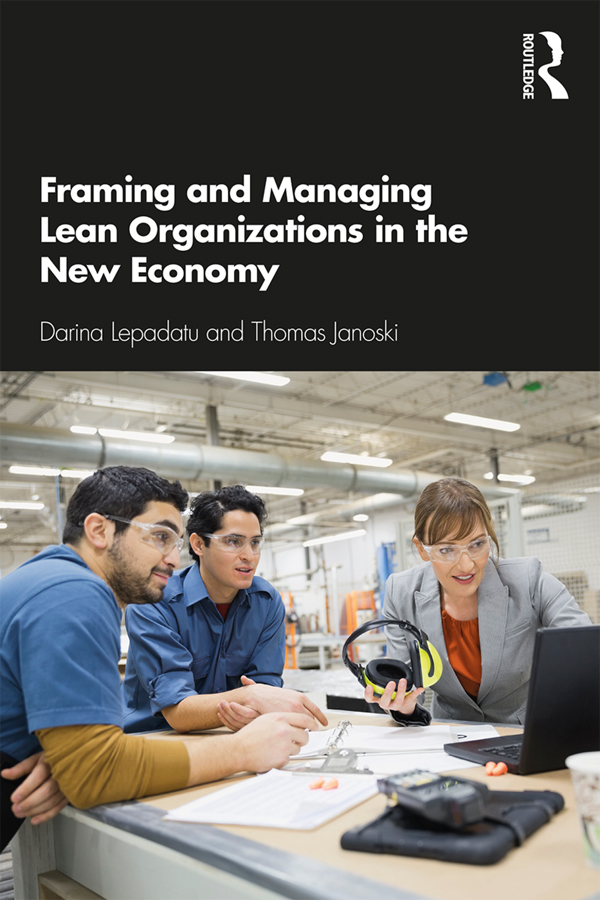
Member Publication: Framing and Managing Lean Organizations in the New Economy

Please check out the recent publication by Darina Lepadatu and OOW member Thomas Janoski. 2020. Framing and Managing Lean Organizations in the New Economy. Routledge.

Here is a short description of the book:

This multidisciplinary book argues that lean production is now the dominant theory of the division of labor replacing “Fordism” and the vague term “post-Fordism.” The first part of the book examines the recognition of lean production in five disciplines from its strong focus in industrial engineering to a weaker recognition in sociology.

The second part discusses three varieties of lean production: Toyotism, Nikeification and Waltonism. As the strongest form at Toyota and Honda, “Toyotism” emphasizes both teamwork and just-in-time inventory. Other corporations emulate Toyotism—Ford, Nissan and McDonalds—but their efforts pale in comparison. A middling form of lean at Nike, Apple and Google is “Nikeification” based on offshoring that is teamwork at home and Fordism abroad. The least form is “Waltonism” that only uses a strong just-in-time inventory system, while Costco and Amazon use more teamwork.  As sociology has ignored lean production in the new millenium, this book gives it a full theoretical and organizational examination.

For further information and to purchase the book, visit Routledge’s website or Amazon.

Also look for Janoski and Lepadatu’s edited book, International Handbook of Lean Production, coming out later this year at Cambridge University Press.

Member Publication: The Behavioral Economics of Pierre Bourdieu

Please check out the recent publication by OOW member Adam Hayes. 2020. The Behavioral Economics of Pierre Bourdieu. Sociological Theory 38: 16-35.

Abstract

This article builds the argument that Bourdieu’s dispositional theory of practice can help integrate the sociological tradition with three prominent strands of behavioral economics: bounded rationality, prospect theory, and time inconsistency. I make the case that the habitus provides an alternative framework to show how social and mental structure constitute one another, where cognitive tendencies toward irrationality can be either curtailed or amplified based on one’s position in the economic field and a person’s corresponding set of dispositions, ranging from more rational doxic dispositions to irrational allodoxic tendencies. Bridging economic sociology and behavioral economics, this work also bears on issues of persistent financial inequality reproduced through self-defeating patterns of economic behavior inculcated into individuals who occupy dominated positions in the social structure. Bourdieu’s thought, and in particular his conception of field+habitus, can usefully be applied to the empirical findings of behavioral economics to understand deviations from rational action as not only cognitive but also socially structured.

Member Publications

Please check out the recent publications by OOW member Jonathan Jan Benjamin Mijs:

2020. “Earning Rent with Your Talent: Modern-Day Inequality Rests on the Power to Define, Transfer and Institutionalize Talent” Educational Philosophy and Theory (Special issue: Talents and Distributive Justice). Online First.

Abstract:

In this article, I develop the point that whereas talent is the basis for desert, talent itself is not meritocratically deserved. It is produced by three processes, none of which are meritocratic: (1) talent is unequally distributed by the rigged lottery of birth, (2) talent is defined in ways that favor some traits over others, and (3) the market for talent is manipulated to maximally extract advantages by those who have more of it. To see how, we require a sociological perspective on economic rent. I argue that talent is a major means through which people seek rent in modern-day capitalism. Talent today is what inherited land was to feudal societies; an unchallenged source of symbolic and economic rewards. Whereas God sanctified the aristocracy’s wealth, contemporary privilege is legitimated by meritocracy. Drawing on the work of Gary Becker, Pierre Bourdieu, and Jerome Karabel, I show how rent-seeking in modern societies has come to rely principally on rent-definition and creation. Inequality is produced by the ways in which talent is defined, institutionalized, and sustained by the moral deservingness we attribute to the accomplishments of talents. Consequently, today’s inequalities are as striking as ever, yet harder to challenge than ever before.

2020. “The paradox of inequality: income inequality and belief in meritocracy go hand in hand.” Socio-Economic Review (in press).

Abstract:

Inequality is on the rise: gains have been concentrated with a small elite, while most have seen their fortunes stagnate or fall. Despite what scholars and journalists consider a worrying trend, there is no evidence of growing popular concern about inequality. In fact, research suggests that citizens in unequal societies are less concerned than those in more egalitarian societies. How to make sense of this paradox? I argue that citizens’ consent to inequality is explained by their growing conviction that societal success is reflective of a meritocratic process. Drawing on 25 years of International Social Survey Program data, I show that rising inequality is legitimated by the popular belief that the income gap is meritocratically deserved: the more unequal a society, the more likely its citizens are to explain success in meritocratic terms, and the less important they deem nonmeritocratic factors such as a person’s family wealth and connections.

This research was cited in an article in the New Statesman: “research by Jonathan Mijs of the London School of Economics (LSE) shows that despite rising income inequality, this has not been accompanied by a rise in concern over inequality – this ‘inequality paradox’ is also seen in internationally comparative data that shows meritocratic beliefs are stronger in more unequal countries.”

New Publication: Special Issue of Work and Occupations: The Emotional Experience of Caregiving Work in a Changing Health Care Landscape

Please check out the new Special Issue of Work and Occupations:

The Emotional Experience of Caregiving Work in a Changing Health Care Landscape
Guest Editors: Timothy J. Vogus, Allison S. Gabriel, Laura E. McClelland

Caregiving work is cognitively, emotionally, and physically demanding. These demands become amplified in the health care sector with the highstakes consequences of the work associated with the work being done with increasing complex, elderly, and fragile patients in a system simultaneously demanding high quality, low cost care. The result has been an epidemic of burnout among caregivers with conservative estimates suggesting it affects at least half of physicians and nurses and such aversive conditions may augur a future shortage of caregivers. Using this context as backdrop, the special issue focuses explicitly on the emotional experience of caregiving work with an emphasis on helping better understand the factors that contribute to emotional exhaustion and well-being at work. In doing so, the articles in the special issue push the frontiers of leading perspectives on emotional experience in service and caregiving work including emotional labor, job demands-resources, and the service triangle.

The articles comprising the special issue advance and challenge these leading perspectives and often do so in tandem with considering the changing reality and increasing complexity and pressures of health-care work. In a study of nurses, Chang and colleagues demonstrate how nurses’ differential experiences of job demands and resources (e.g., the balance of their social support exchanges) can trigger anger that produces physical (musculoskeletal) injuries. In a rich audio diary study of nurses Cottingham and Erickson develop a more contextualized, socially embedded emotional practice approach. For instance, they capture both the complex, embodied emotional experiences of care providers and powerfully depicting how shared social position affects how and for whom emotional resources are provided. Amid the growing burnout and dissatisfaction among caregivers, Lee and colleagues counterintuitively find that job dissatisfaction may itself be a job resource that is positively associated with generating quality improvement ideas in 12 clinics. The positive effects of dissatisfaction are stronger for individuals with shorter tenure, in central (caregiving) roles, and when engaged in more boundary spanning. Finally, Kossek et al. examine the work of an underappreciated set of workers in care delivery—job schedulers. In doing so, they push the frontier of the service triangle by illustrating how the scheduler adjudicates disputes among employees, administrators and patients through various forms of patching (i.e., ongoing adjustments to address holes in scheduling) that takes the unique needs of employers, employees, and patients into consideration. Exploratory analysis also show that how the schedulers address these issues may have patient consequences in fewer pressure ulcers.

Articles
The Social Context of Caregiving Work in Health Care: Pushing Conceptual and Methodological Frontiers
Vogus, T., Gabriel, A., and McClelland, L.

Social Support Exchange and Nurses’ Musculoskeletal Injuries in a Team Context: Anger as a Mediator
Chang, C.-H., Yang, L.-Q., & Lauricella, T. K.

The Promise of Emotion Practice: At the Bedside and Beyond
Cottingham, M. & Erickson, R.

Dissatisfied Creators: Generating Creative Ideas Amid Negative Emotion in Health Care
Lee, Y. S. H., Nembhard, I. M., & Cleary, P. D.

Work Schedule Patching in Health Care: Exploring Implementation Approaches
Kossek, E. E., Rosokha, L. M., & Leana, C.

Member Publication: The Death of Idealism: Development and Anti-Politics in the Peace Corps

Please check out the recent publication by OOW member Meghan E Kallman. 2020. The Death of Idealism: Development and Anti-Politics in the Peace Corps. Columbia University Press.

Here is a short description of the book:

Peace Corps volunteers seem to exemplify the desire to make the world a better place. Yet despite being one of history’s clearest cases of organized idealism, the Peace Corps has, in practice, ended up cultivating very different outcomes among its volunteers. By the time they return from the Peace Corps, volunteers exhibit surprising shifts in their political and professional consciousness. Rather than developing a systemic perspective on development and poverty, they tend instead to focus on individual behavior; they see professions as the only legitimate source of political and social power. They have lost their idealism, and their convictions and beliefs have been reshaped along the way.

The Death of Idealism uses the case of the Peace Corps to explain why and how participation in a bureaucratic organization changes people’s ideals and politics. Meghan Elizabeth Kallman offers an innovative institutional analysis of the role of idealism in development organizations. She details the combination of social forces and organizational pressures that depoliticizes Peace Corps volunteers, channels their idealism toward professionalization, and leads to cynicism or disengagement. Kallman sheds light on the structural reasons for the persistent failure of development organizations and the consequences for the people involved. Based on interviews with over 140 current and returned Peace Corps volunteers, field observations, and a large-scale survey, this deeply researched, theoretically rigorous book offers a novel perspective on how people lose their idealism, and why that matters.

For further information and to purchase the book, visit Columbia University Press’ website or Amazon.