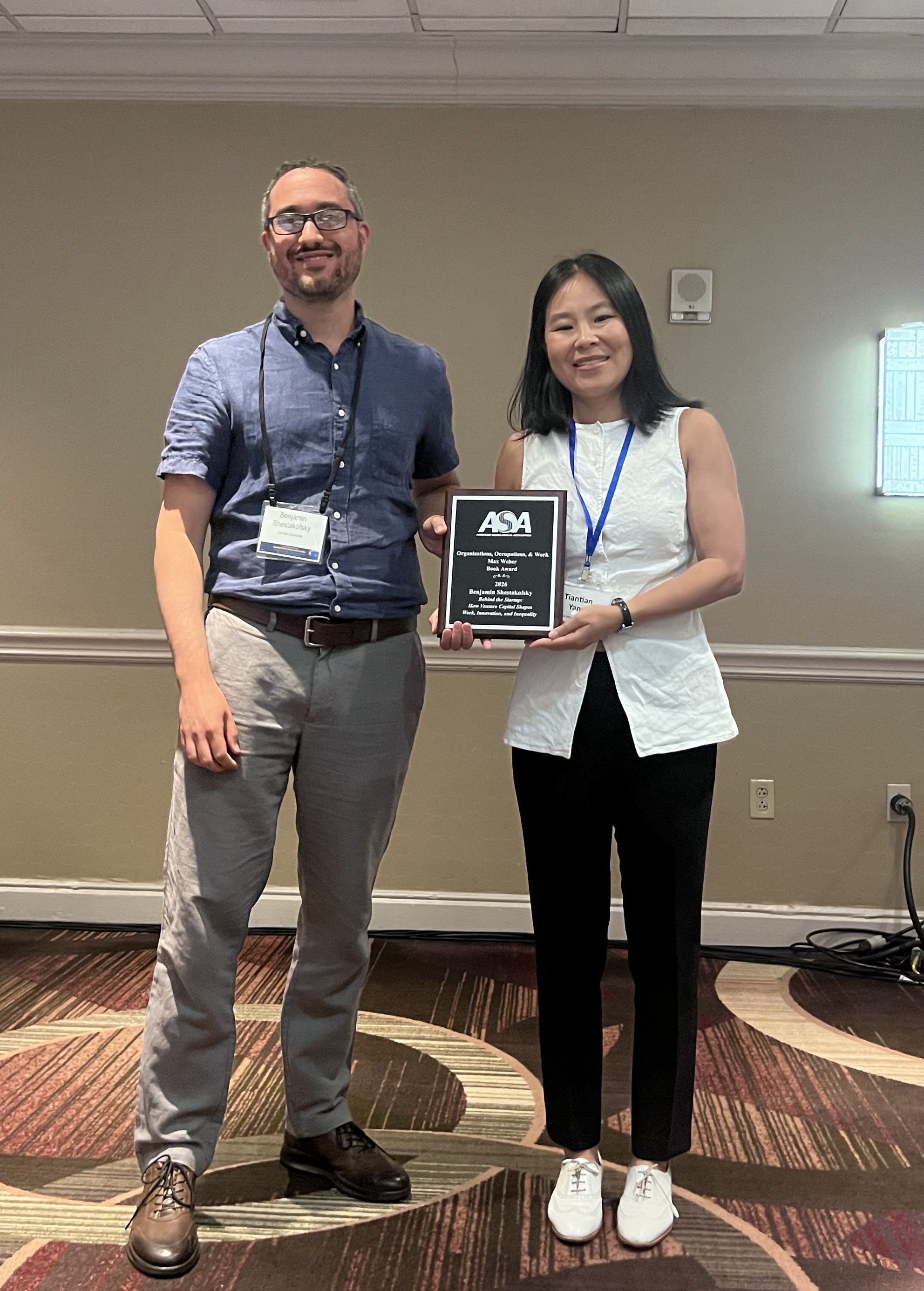
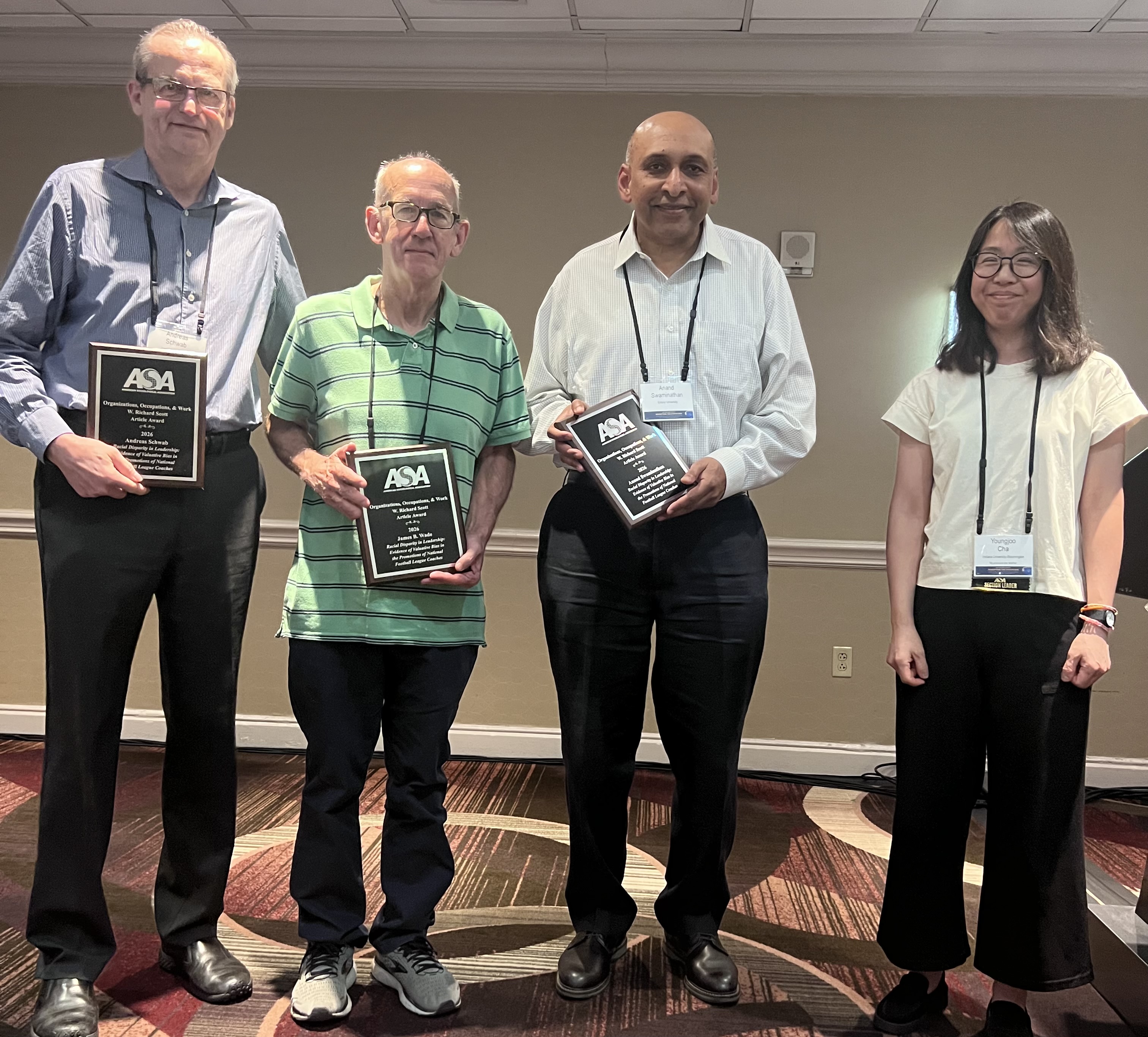
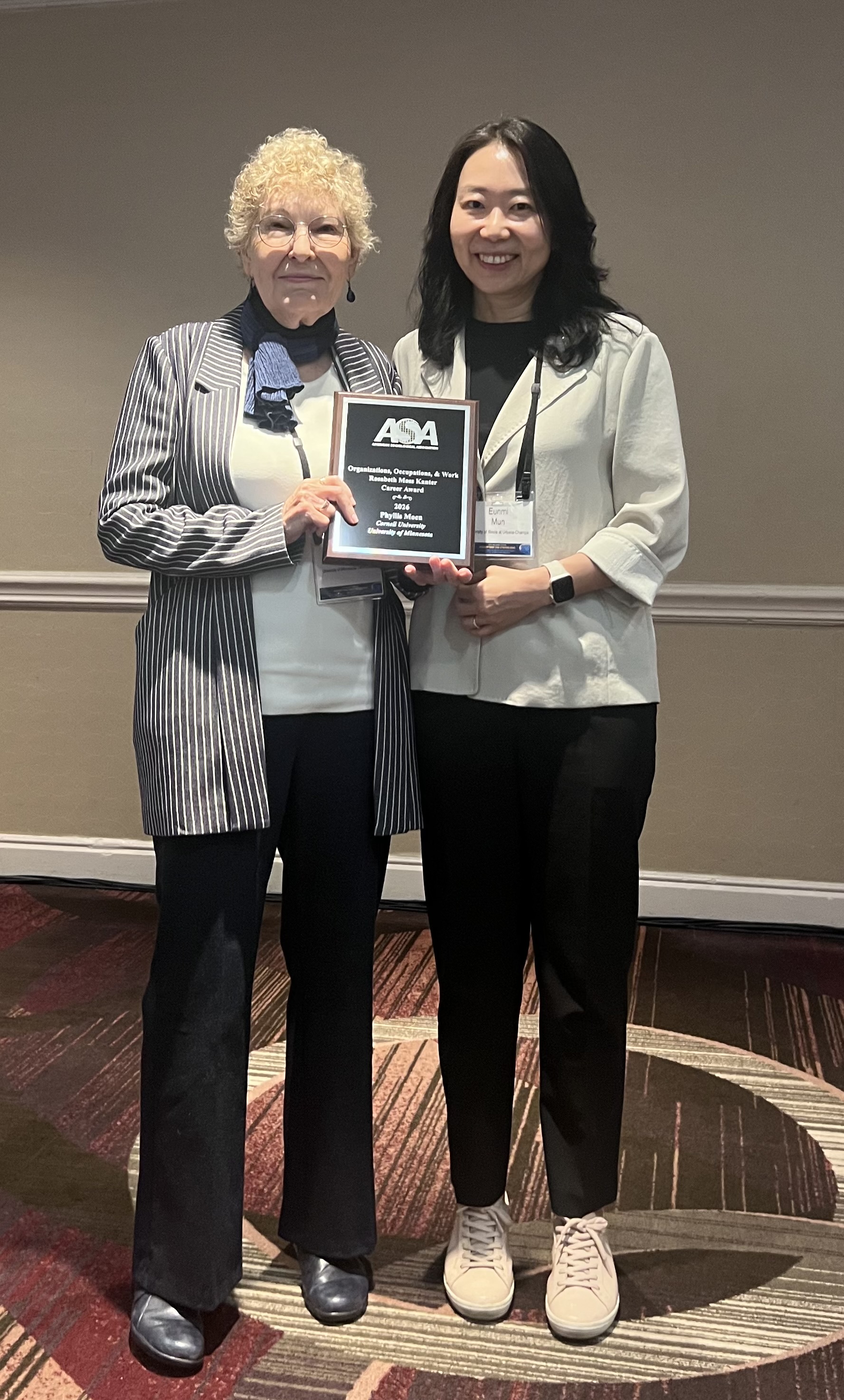
Congratulations to the 2026 award recipients for their achievements!
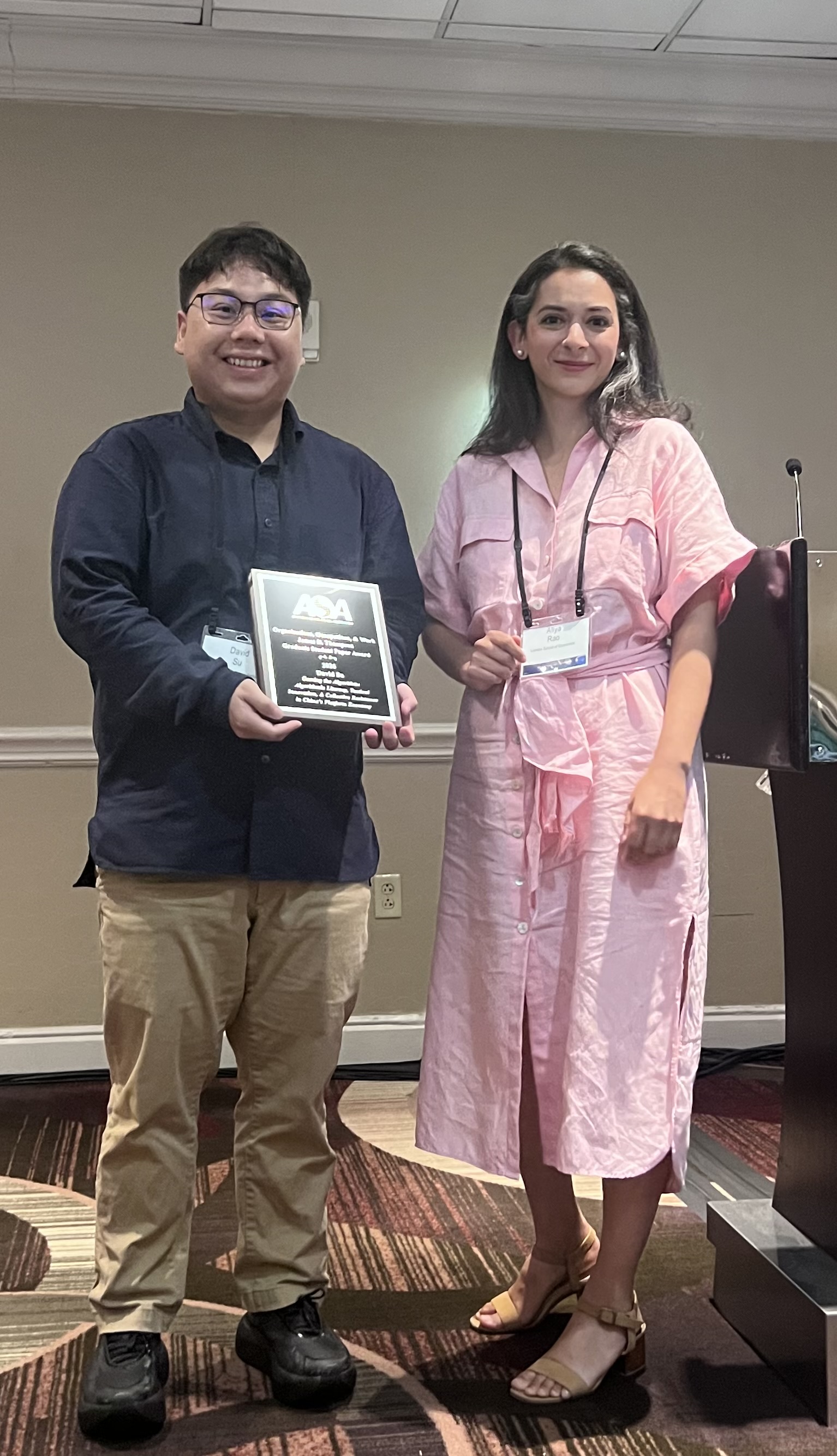
David Su won the James Thompson Graduate Paper Award for his paper “Gaming the Algorithm: Algorithmic Literacy, Tactical Innovation, and Collective Resistance in China’s Platform Economy.”
OOW members attending the 2026 American Sociological Association Annual Meeting may be interested in the following thematic session:
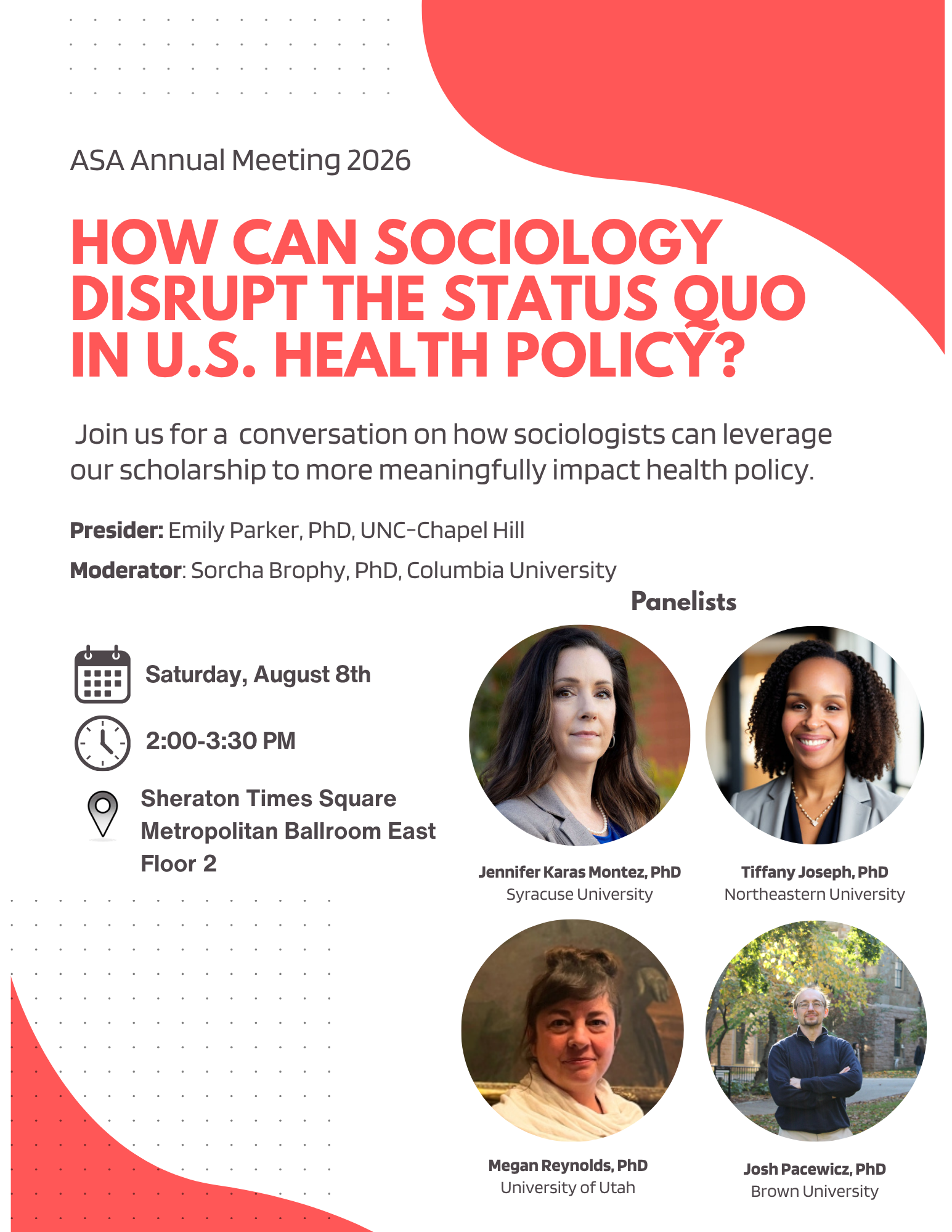
Session 20834: How Can Sociology Disrupt the Status Quo in U.S. Health Policy?
Saturday, August 8, 2:00–3:30 p.m. Sheraton, Second Floor, Metropolitan Ballroom East
Description: Under the current presidential administration, we have seen significant threats to healthcare access, public health, and health promoting social policies in the U.S. Despite our discipline’s theoretical frameworks and methodological tools, sociologists have often ceded health policy leadership opportunities to adjacent fields. This session asks: How can sociologists more meaningfully impact health policy? What core sociological insights can animate research agendas to disrupt the status quo in health policy? How can we position existing scholarship and produce new knowledge to meet this political moment? This panel will feature scholars working across multiple areas to invite a conversation on how our discipline can catalyze change in health policy.
Presider: Emily Parker, University of North Carolina-Chapel Hill Moderator: Sorcha Brophy, Columbia University
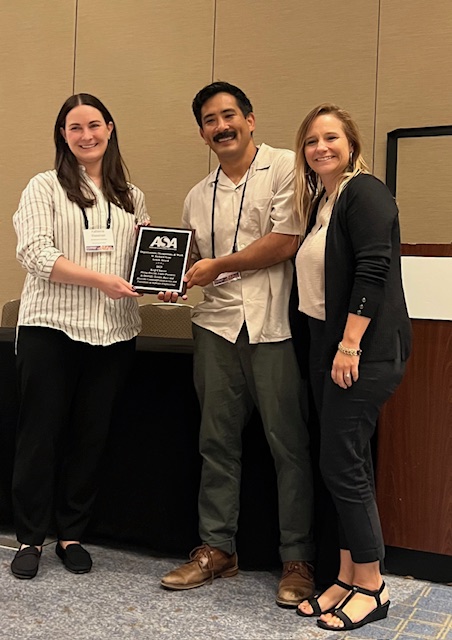
Anna Fox (left) won the James Thompson Graduate Paper Award for her paper “Covalent Logics: Policing, Family Values, and the Reproduction of Inequality.”
1 – Organizations We invite paper submissions under the broad topic of organizations, including studies that assess the implications of their structures, norms, policies, and practices. (Session Organizer) Elizabeth A. Armstrong, University of Michigan; (Session Organizer) Matthew Clair, Stanford University
2 – Professions and Occupations We invite paper submissions on the broad topic of professions and occupations, including studies that focus on their emergence, evolution, and implications. (Session Organizer) Nicholas Occhiuto, Hunter College; (Session Organizer) Alexandrea Ravenelle, University of North Carolina, Chapel Hill
3 – Gender Inequality in Organizations We invite paper submissions under the topic of gender inequality in organizations. (Session Organizer) Sharla Alegria, University of Toronto; (Session Organizer) Alexandra Kalev, Tel-Aviv University
4 – Labor Markets We invite paper submissions under the broad topic of labor markets, including studies that examine their structures, dynamics, and consequences. (Session Organizer) Koji Chavez, Indiana University; (Session Organizer) Steve McDonald, North Carolina State University
5 – Future of Work We invite paper submissions under the broad topic of the future of work. (Session Organizer): Angèle Christin, Stanford University; (Session Organizer) Steve Vallas, Northeastern University
6 – Informal and Unregulated Economies We invite paper submissions under the topic of informal and unregulated economies, including studies that examine migrant and transnational dynamics. (Session Organizer) Rhacel Salazar Parreñas, Princeton University; (Session Organizer) Patricia Ward, Bielefeld University
7 – AI in the Workplace (joint with Communication, Information Technologies, and Media Sociology section) We invite paper submissions under the topic of Artificial Intelligence (AI) in the workplace. (NB: Thanks to a special relationship between the Communication, Information Technologies, and Media Sociology (CITAMS) section and the journal Information, Communication & Society (ICS), all papers with a theme of information, communication, or media that are presented at the 2025 meetings of the ASA are eligible for submission to a special issue of ICS edited by the CITAMS chair each fall.) (Session Organizer) Barbara Kiviat, Stanford University; (Session Organizer) Simone Zhang, New York University.
8 – Section on Organizations, Occupations, and Work Refereed Roundtables (Session Organizer) Michel Anteby, Boston University; (Session Organizer) Sigrid Luhr, University of Illinois, Chicago